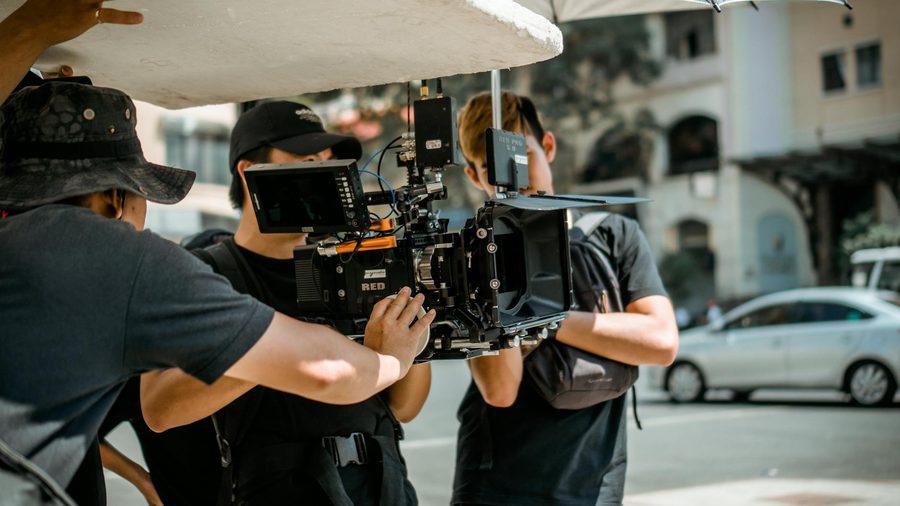
Business Launch Videos: Planning Your Film and Promos
A business launch video introduces a new company, product or app and gives viewers one clear next step. Plan the audience, message, proof and destination before filming, then build a main launch film and shorter promotional edits around the same story. The delivery plan should reflect where the campaign will actually run.
A launch film needs a campaign brief
A launch is a particular moment: people are meeting the business or offer for the first time. A beautiful montage can create interest, but viewers also need to understand what is being launched, why it matters to them and what they can do next.
Airframe Media is currently working on a business launch video for Zipo, a new ride-hail app in London. That project is in progress. This guide explains how to plan launch and promotional content; the examples below are planning suggestions, not a description of Zipo's finished film, app features or campaign results.
For production support, see our promotional video production in London. If you are comparing launch films with other formats, our promotional video guide covers the wider options.
Launch video, promo video or app demo?
These assets can share footage, but they answer different questions.
| Asset | Question it answers | Useful place to use it |
|---|---|---|
| Main launch film | What is new, who is it for and why should I care? | Launch landing page, announcement or presentation |
| Short promotional edit | Why should I stop and find out more? | Social feeds and campaign placements |
| App or product demonstration | How does this actually work? | Product page, onboarding or follow-up content |
| Founder introduction | Who is behind the business and why did they build it? | About page, launch communications or partner presentation |
An app demonstration can be part of the main film. It does not need to show every screen. Select the interaction that proves the main benefit, and give viewers enough time to understand it.
1. Choose one audience and one action
Start with a sentence: “After watching, this audience should understand this benefit and take this action.” If that sentence contains several audiences and several unrelated actions, split the brief.
For a ride-hail business, a film for prospective passengers could have a different message from a driver recruitment film. A presentation for partners may need different evidence again. Those are possible audience groups to consider, not a statement about Zipo's campaign.
Choose a destination that is ready for the audience. That could be a launch information page, an interest form or an available app listing. A pre-launch film should not ask people to download something that is not yet available. Keep the call to action accurate when you reuse the edit later.
Use our video production brief template to record the audience, message, deliverables, budget and dates in one place.
2. Build a story you can demonstrate
A practical launch-film structure is:
- Recognisable situation: show the moment your audience understands.
- The offer: name the business or product and explain its purpose plainly.
- Proof in use: show a real interaction, an approved product view or a credible explanation.
- Next step: make the destination and action easy to remember.
The following is an illustrative storyboard for an app launch. It is not a Zipo shot list.
| Story beat | Possible visual | Decision needed before filming |
|---|---|---|
| Situation | A person preparing for a journey | Which audience and situation are we representing? |
| Introduction | Brand identity and a short spoken or written explanation | What is the one message the business has approved? |
| Demonstration | A readable screen recording or staged interaction | Is this the current interface, and can the shown action actually be completed? |
| Outcome | A visual that follows logically from the demonstration | What can we substantiate without exaggerating? |
| Action | A clear end frame and destination | Is the page or listing available when the film launches? |
Avoid substituting unsupported promises for proof. A comparison about price, speed or availability needs evidence and approval from the business before it goes into a script. If a feature is still being developed, do not present it as something customers can use today.
3. Plan the edits before the shoot
A single filming day can supply several assets when their framing and content are planned together. Cropping a finished widescreen film later may lose the phone screen, a person's face or the words that explain the offer.
Build a delivery list around actual placements. The durations below are starting points for creative planning, not fixed platform requirements or promised performance.
| Deliverable | Illustrative starting length | What to plan |
|---|---|---|
| Main launch film | 45–90 seconds | Complete story, clear demonstration and final action |
| Social introduction | 15–30 seconds | One audience, one message and a readable opening |
| Short reminder | 6–15 seconds | A recognisable idea and a simple next step |
| Focused product demo | As long as the task needs | Legible interface, logical sequence and accurate narration |
| Still frames and thumbnails | Not applicable | Separate compositions with room for approved text |
Confirm landscape, portrait or square framing with the person placing the campaign. Ask for captions and an appropriate clean version where needed. Check current destination specifications before export, including file size, duration and where interface controls may cover text.
4. Get the product and London locations ready
For app filming, agree which build and screens can be recorded. Use demonstration data rather than real customer details. Assign someone from the product team to check that the screen sequence matches how the service works. Record clean screen captures alongside footage of the device so the editor has readable alternatives.
For location work, agree access, filming arrangements and the practical schedule before the crew arrives. London's streets, venues and changing conditions can affect the plan. Confirm location permissions with the relevant owner or authority for the actual setup rather than assuming one rule covers every shoot.
If a vehicle appears, plan the scene so operating the camera or phone is not a task for a person driving. A stationary demonstration may explain the product more clearly than a complicated moving shot. Leave space in the schedule for screen reflections, continuity and repeatable actions.
5. Set the budget around decisions, not just duration
Two films of the same length can require very different productions. A quote should specify the work behind the finished assets:
- Concept, script and storyboard development.
- Locations, contributors, crew and filming time.
- Product screen capture, animation or motion graphics.
- Music, voice-over and the intended usage of supplied assets.
- Main edit, shorter versions, captions and delivery formats.
- Review rounds and who gives consolidated feedback.
Separate essential launch assets from useful later additions. If the budget changes, that makes it easier to reduce scope without losing the story's purpose. Our corporate video cost guide explains the production choices that affect a quote.
6. Work backwards from publication
Set milestones for the brief, product readiness, script approval, shoot, first edit, consolidated feedback and final delivery. Keep a separate publication check after export: a finished video file is only one part of a working launch.
Before release, check:
- The business name, interface and statements match the approved current version.
- Captions, on-screen text and audio communicate the same message.
- The call to action leads to the correct live destination.
- Portrait and landscape versions remain readable on their intended screens.
- The person publishing the campaign has the right files, thumbnails and descriptions.
- One named person can approve any last-minute factual changes.
If the launch date or product availability moves, review the end frame and wording before reusing the film. Avoid embedding a date throughout the edit when a separate end card would make future updates simpler.
7. Measure the action you asked for
Choose a primary measure that follows the campaign objective. An interest campaign might track completed forms. A product campaign might track visits to the product destination and the next completed action. Watch time and views help explain how people respond, but they do not establish sales or app adoption on their own.
Give different placements distinguishable tracking links where the destination supports them, and test the journey before launch. Compare creative versions against the same objective and a similar audience. Report what you can observe, and keep attributed results separate from assumptions about what the video caused.
Frequently asked questions
How long should a business launch video be?
Choose the shortest length that explains the offer, demonstrates the benefit and gives a clear next step. A 45–90 second main film can be a useful planning starting point, with shorter edits for other placements. The right length depends on the story and audience, not a universal rule.
Can one shoot create a launch film and social promos?
Yes, if the brief lists the formats, messages and versions before filming. Plan portrait and landscape compositions, alternative openings, demonstration shots and stills so each edit has the material it needs.
Do we need a finished app before filming?
Some material, such as a founder introduction or location footage, can be planned independently. Any demonstration presented as a working feature should match an approved usable product version. If the interface changes, check the recording again before publication.
Is a launch video the same as a product explainer?
A launch video introduces the offer at a particular moment and encourages an action. An explainer focuses on understanding how something works. A campaign may need both, and they can share footage while using different structures.
What should we send a video production company?
Send the audience, main message, intended action, publication destinations, launch timing, budget range and available product materials. Include the person who can approve claims and screen recordings. A clear brief lets the production team recommend a suitable scope.
Plan your launch film
Tell us what you are launching, who needs to understand it and where the campaign will run. We can discuss the main film, promotional edits and practical production requirements through our enquiry form. Explore promotional video production for the service overview.
ABOUT THE AUTHOR
Founder & CEO
Liam founded Airframe Media in 2015 and leads creative direction across the studio. His work spans corporate, commercial, and event films for UK businesses including Levy, Taylor Wimpey, and ExCeL London, and he writes about professional video production in London.
TAGS
Related Services
Ready to Bring Your Vision to Life?
Let's discuss how our video production services can elevate your brand