Drone Filming Pre-Production Checklist
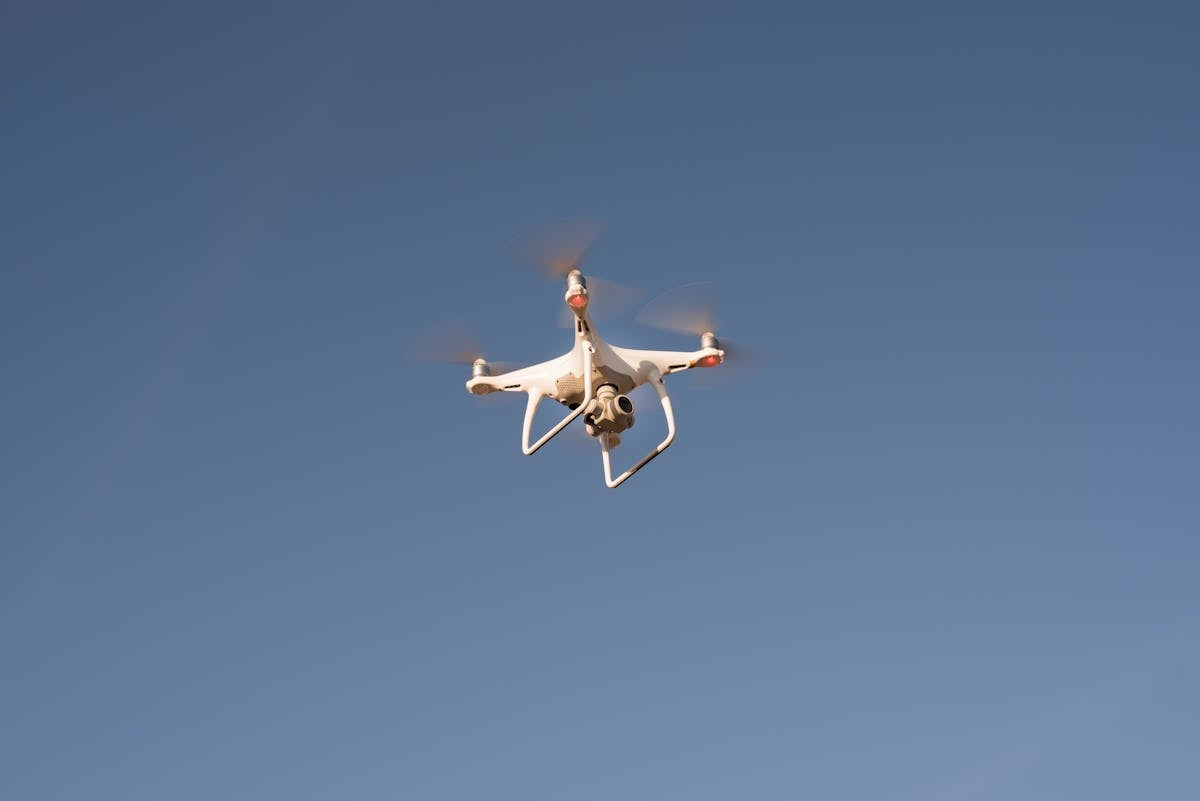
 Photo by Altaf Shah on Pexels
A drone shoot is decided in pre-production, not on the day. Before the crew arrives you need the airspace and the location checked, permission from whoever controls the site, a plan for crowds and events, a weather call with a backup date, a shot list and current insurance. This checklist covers each step in the order they matter.
1. Check the Airspace Before the Location
Airspace is the first check, and it is done for the exact take-off point rather than the postcode on the brief. Two streets apart can mean a different flight restriction zone, so the pilot needs the launch location before the recce is booked.
The check itself is quick once the location is known. In the UK, pilots use the NATS Drone Assist app to read active NOTAMs and flight restriction zones around the planned take-off point. Anything flagged there changes the plan, not the paperwork.
London compresses those restrictions. London City Airport's Flight Restriction Zone has a 5km radius, and Heathrow, Gatwick and Stansted between them restrict most of Greater London. If the site sits near any of them, that is a planning constraint to raise at the quote stage. Our drone filming in London page covers how a city aerial shoot is scheduled around it.
2. Get Permission From the Venue or Landowner
Airspace clearance is not landowner permission. A site can be legal to fly over and still be somewhere you are not allowed to launch, and the two are checked separately.
Some land is closed outright. The City of London Corporation prohibits drones across the Square Mile, and Canary Wharf Group bans them across its entire estate, including the plazas and waterside areas. Both are enforced by security patrols.
The Royal Parks are a third case. All eight parks, including Hyde Park, Regent's Park, Richmond Park, Greenwich Park and Bushy Park, require a commercial filming permit plus separate drone clearance from the Royal Parks Agency, and the decision can take up to 6 weeks. For anything inside a park, start that request as early as the shoot allows.
3. Plan Around Crowds and Live Events
Crowd control is where a drone shoot fails most visibly, and the rules are strict in central London. Congested-area rules apply across central London, and a drone is never flown over a crowd.
Distance is the working constraint. Operations keep 50m from uninvolved people, and that distance has to hold as people move through the shot, not only at take-off. The altitude limit is 400ft or 120m, and the pilot maintains visual line of sight throughout the flight.
Live events need their own conversation. A public event, a parade or a busy street adds people the shot cannot avoid, and the answer is often a different location, a different time of day or a ground-level shot list. Raising it in pre-production is what keeps the shoot day flexible.
4. Agree the Weather Call and a Backup Date
Weather is the one variable nobody controls, so the decision process is agreed in advance. Wind, rain and visibility limits come from the manufacturer's specification for the aircraft and the pilot's risk assessment, not from how the sky looks at breakfast.
A backup date belongs in the booking, not in a conversation after a cancelled call. Agree who makes the call, what time it happens and how much notice the client gets. A workable pattern is a go or no-go call at a set time the day before, with the backup date held.
Indoor and ground-level footage is the usual fallback when a flight cannot go ahead. Deciding in advance which shots still work without the drone keeps the edit alive instead of leaving a gap in the schedule.
5. Write the Shot List Before the Recce
The shot list comes before the recce, not after it. Knowing the shots you need tells the pilot which flight lines are worth asking for, which height matters and whether the location can deliver the opening frame at all.
Write the list from the edit backwards. Establish the building or the site, then the detail shots that show scale, access and movement, then any single image the film depends on. The recce then confirms or removes each one.
If aerials are one part of a wider production, our aerial and specialist filming service explains where drone coverage sits alongside ground crew and specialist rigs. The shot list is the document that keeps both units working on the same day.
6. Confirm Insurance and Paperwork
Insurance and paperwork are checked before the crew arrives, not on the morning. Commercial operators hold a CAA Operator ID, each pilot holds a Flyer ID, and the Operator ID is displayed on the aircraft.
Cover is the part clients most often assume. Commercial drone operations need specialist public liability insurance, because standard business policies exclude aviation. A general business insurance certificate is not the document to ask for.
Airframe Media has insured its drones with Coverdrone for more than five years. It is reasonable to ask the pilot for their CAA registration and insurance documents before the shoot, and most operators will send them without being asked twice.
Our guide to UK drone regulations for commercial video production sets out what each document covers.
7. What to Send the Crew Before the Day
The final pre-production step is the handover pack, and it is short. The pilot needs the exact address and take-off point, the site contact, confirmation that permissions are in place, access arrangements and the running order for the day.
Add the shot list, the weather call time and the backup date. If the shoot involves other crew, send the same pack to everyone so the aerial unit and the ground unit work from one document.
If you are planning a drone shoot and want the pre-production handled alongside the rest of the production, get in touch to talk it through.
Frequently Asked Questions
What should I prepare before a drone filming day in London?
Confirm four things before the day: airspace checked for the exact take-off point, permission from whoever controls the site, a crowd and event plan, and a weather call with a backup date. Add the shot list, current insurance and a handover pack for the crew. Airspace and landowner permission are separate checks, and parks and estates usually take the longest to clear.
Who arranges the drone permissions for a shoot?
The operator arranges them, and the client confirms the site details. Airspace clearance sits with the pilot, who checks NOTAMs and flight restriction zones for the exact take-off point. Permission to launch and film comes from whoever controls the land, such as a venue, an estate or a park authority. On a commissioned shoot, ask for confirmation in writing before the crew travels.
What happens if the weather stops a drone shoot?
The agreed weather call decides, usually the day before. Wind, rain and visibility limits come from the manufacturer's specification and the pilot's risk assessment. If the flight cannot go ahead, the backup date is used and the indoor or ground-level shots are filmed as planned, so the edit still has what it needs.
About the Author
This guide was written by Liam Mead, founder of Airframe Media. Liam is a London-based cinematographer and producer with a decade of experience shooting corporate, event, and brand-film work across the UK. The coverage guidance and production observations in this article draw on Airframe Media's 2025–2026 production records.
Connect on LinkedIn or read more of Liam's writing on the Airframe Media blog.
ABOUT THE AUTHOR
Founder & CEO
Liam founded Airframe Media in 2015 and leads creative direction across the studio. His work spans corporate, commercial, and event films for UK businesses including Levy, Taylor Wimpey, and ExCeL London, and he writes about professional video production in London.
TAGS
Related Services
Ready to Bring Your Vision to Life?
Let's discuss how our video production services can elevate your brand