London Drone Videography & Aerial Filming Services Guide
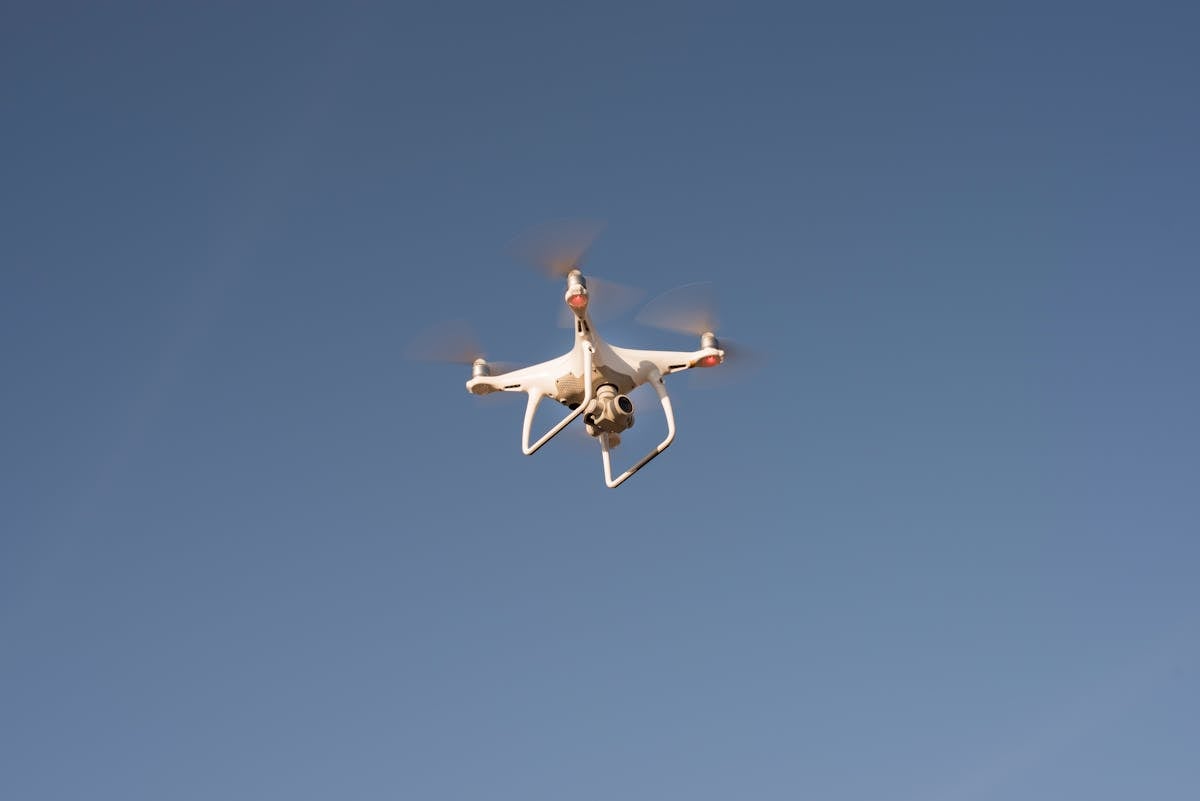 Photo by Daniel Reche on Pexels
Aerial filming in London needs a drone operator with the CAA registration, pilot competency and any authorisation the specific flight requires, plus insurance and landowner and airspace permissions. Allow two to three weeks for straightforward locations and four to six weeks for central London. Airframe Media plans and films drone filming in London as part of a full production.
Quick Answer
Professional aerial filming in London needs drone pilots holding the CAA competency the operation calls for (an A2 Certificate of Competency or a GVC, depending on the category), with commercial insurance and documented airspace permissions. Day rates range from £800 for basic coverage to £2,500+ for multi-drone cinema-grade shoots. Turnaround for edited aerial footage is 1-2 weeks. All commercial operators must register with the CAA annually and display Operator ID on every aircraft.
What Is Aerial Filming?
Aerial filming captures footage from elevated perspectives using professional drones equipped with cinema-grade cameras. Modern drone technology has transformed video production, offering shots that previously required helicopters or cranes at a fraction of the cost.
Types of Aerial Shots
Establishing shots - Wide views that set the scene and show scale Reveal shots - Rising or moving to unveil a location or subject Tracking shots - Following movement from above (vehicles, people, events) Overhead shots - Direct top-down perspectives for architectural and event coverage Orbits - Circling a subject to show all angles, ideal for property and landmark filming Flythrough - Moving through spaces for immersive perspectives (requires indoor-capable drones) Dolly zoom (Vertigo effect) - Combination of camera movement and zoom creating a disorienting perspective shift
Equipment We Use
At Airframe Media, we operate professional-grade drones including:
- DJI Inspire 3 - Cinema-quality 8K footage with full-frame sensor, ProRes RAW internal recording, and RTK positioning for centimetre-accurate flight paths
- DJI Mavic 3 Cine - ProRes 422 HQ codec for professional colour grading, 4/3 CMOS sensor with adjustable aperture, compact enough for tight London locations
- DJI Avata 2 - FPV drone for dynamic, cinematic movement shots through architecture and landscapes
- Sony FX6 on Freefly Alta X - Heavy-lift platform carrying full cinema cameras for broadcast-grade aerial work
All our equipment includes multi-axis gimbal stabilisation for smooth footage regardless of wind conditions up to 15mph.
Types of Aerial Filming Projects
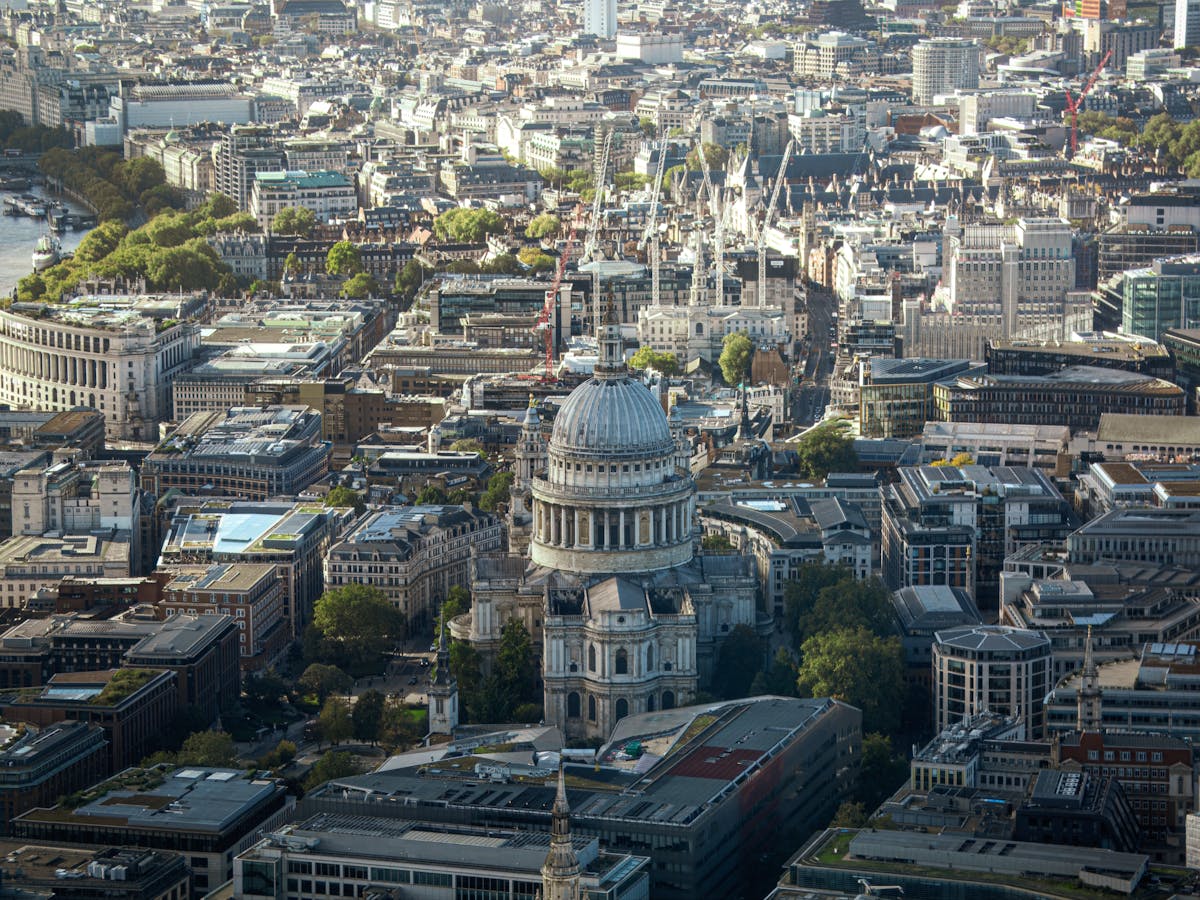 Photo by Jimmy K on Pexels
Property and Real Estate
Aerial footage adds significant value to property marketing, and London's premium real estate market has embraced drone video as standard for listings above £2 million. Typical applications include:
- Estate agent listings - Showcase properties, gardens, and surroundings with establishing aerial shots that communicate neighbourhood context
- Development marketing - Document building progress with repeat-visit aerial surveys showing construction milestones
- Land surveys - Visual documentation for planning applications, environmental assessments, and boundary verification
- Interior reveals - Dramatic approaches from exterior to interior that create compelling listing videos
Construction and Infrastructure
Document projects from perspectives that communicate true scale:
- Progress documentation - Monthly or quarterly aerial surveys showing development against timeline, essential for investor reporting
- Site surveys - Visual assessments for planning, safety audits, and stakeholder presentations
- Marketing content - Showcase completed projects at a scale that ground-level photography cannot convey
- Inspection footage - Hard-to-reach structural elements safely captured without scaffolding or cherry-pickers
Events and Festivals
Capture the scale and atmosphere of gatherings that ground cameras cannot fully convey:
- Festival coverage - Crowd shots and venue overviews showing attendance scale
- Corporate events - Establishing shots that elevate event films from functional to cinematic
- Sporting events - Dynamic overhead coverage of outdoor competitions and races
- Wedding venues - Ceremony and reception venue showcases that command premium listing fees
Corporate and Brand Films
Elevate your corporate video production with perspectives that communicate prestige:
- Office and facility tours - Dramatic reveals of headquarters and operational sites
- Product launches - Creative overhead perspectives on product reveals and demonstrations
- Company overviews - Location and operation shots that establish scale and capability
- Documentary content - Context and establishing shots for brand storytelling
Tourism and Destinations
Showcase locations at their best with movement that static photography cannot replicate:
- Hotel and resort marketing - Grounds, facilities, and surrounding area overviews
- Destination marketing - City and landscape promotion for tourism boards and travel brands
- Travel content - Dynamic location showcases for editorial and commercial travel media
- Virtual tours - Aerial perspectives integrated with ground-level walkthroughs for immersive experiences
Why Choose Professional Drone Filming in London?
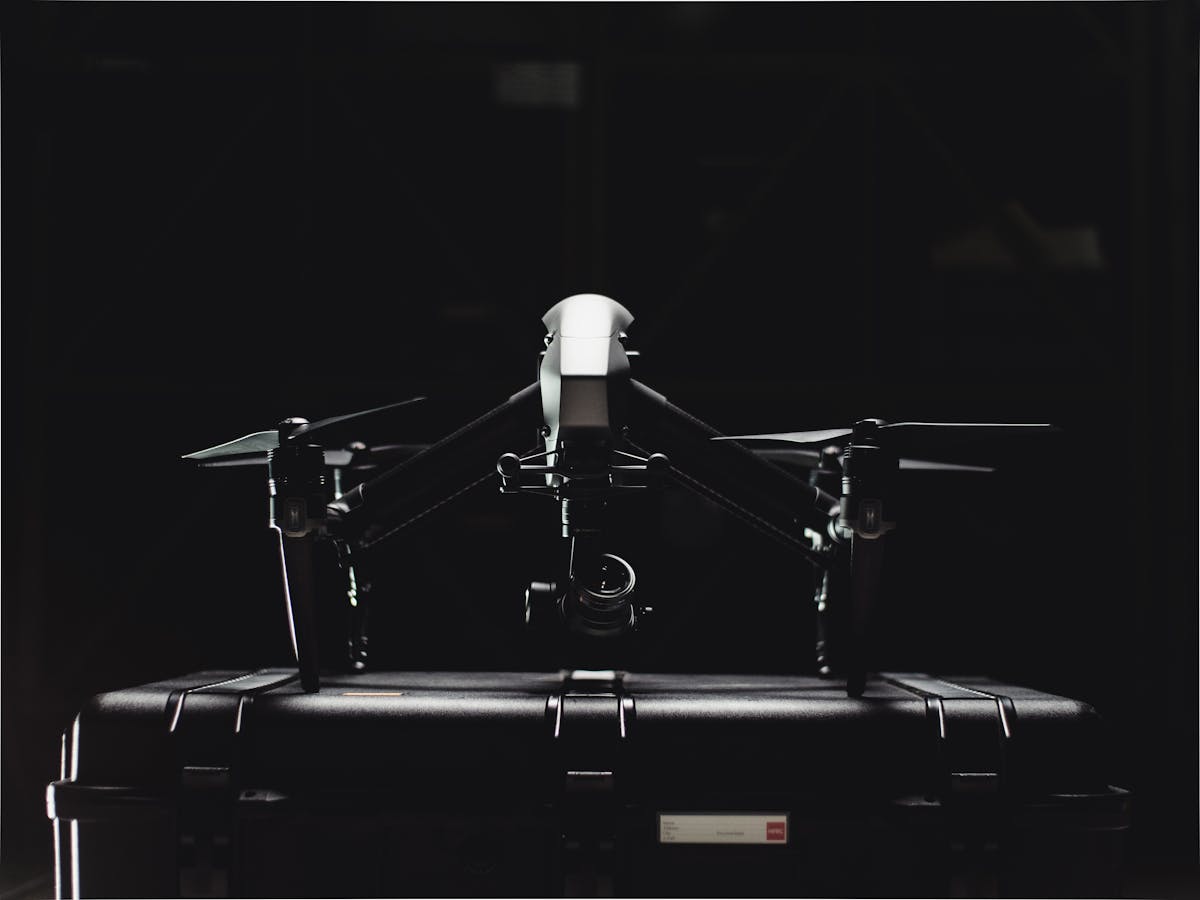 Photo by Tembela Bohle on Pexels
CAA Certification Requirements
Flying drones commercially in the UK requires specific certification. The Civil Aviation Authority mandates:
- Operator ID - Business registration renewed annually (£10.33 per year). Required for any organisation operating drones, even if employees hold individual certifications.
- Flyer ID - Personal competency certification, obtained by passing an online theory test. This is the minimum requirement and does not authorise commercial operations within 50m of people.
- A2 Certificate of Competency (A2 CofC) - Required for commercial operations within 50m of uninvolved people. Involves classroom training and a practical flight assessment.
- GVC (General Visual Line of Sight Certificate) - The highest standard for UK drone operations. Required for flights in congested areas (defined as any area substantially used for residential, commercial, industrial, or recreational purposes, which covers virtually all of London).
Unlicensed operators risk fines up to £5,000 and criminal prosecution under the Air Navigation Order. When commissioning aerial footage, always verify your operator's credentials against the CAA's public register.
For the complete regulatory landscape, see our UK drone regulations guide for commercial video production.
Insurance and Liability
Professional aerial filming operators carry layered insurance:
- Public liability insurance: minimum £2 million for basic operations, but £5 million is the effective minimum for London due to property owner requirements
- Equipment insurance: covering drones, cameras, lenses, and support gear against damage and theft
- Airspace liability: coverage for third-party claims arising from drone operations, including property damage and personal injury
- Professional indemnity: protection against claims of negligence in flight planning or execution
If your operator is not properly insured, you could share liability for incidents occurring on your premises, at your event, or involving your property. Request current insurance certificates before booking; they should show the named insured, coverage limits, and policy expiry date.
Permission and Airspace Management
London has some of the most complex airspace in Europe. Professional operators handle:
- CAA authorisations: applications through the NATS Airspace User Portal for operations in controlled airspace (much of Greater London)
- Property permissions: documented landowner consent covering take-off, landing, and overflight
- Flight planning: NOTAM (Notice to Airmen) submissions alerting other airspace users to drone activity
- Risk assessments: site-specific safety documentation meeting CAA CAP 722 standards
- Local authority notifications: many London boroughs require advance notice of commercial drone operations, particularly in parks and public spaces
Equipment Quality Difference
Professional drones offer capabilities consumer models cannot match:
- 4K/6K/8K resolution: future-proof footage suitable for cinema, broadcast, and large-format display
- ProRes/RAW codecs: maximum flexibility in post-production colour grading and VFX integration
- Large sensors: Super 35mm and full-frame sensors delivering better low-light performance and shallower depth of field
- Professional gimbals: multi-axis stabilisation maintaining horizon level through aggressive manoeuvres
- Redundancy systems: dual batteries, dual IMUs, dual compasses for urban flight safety
- RTK positioning: centimetre-accurate GPS enabling precise, repeatable flight paths for VFX plate shots
Our Aerial Filming Process
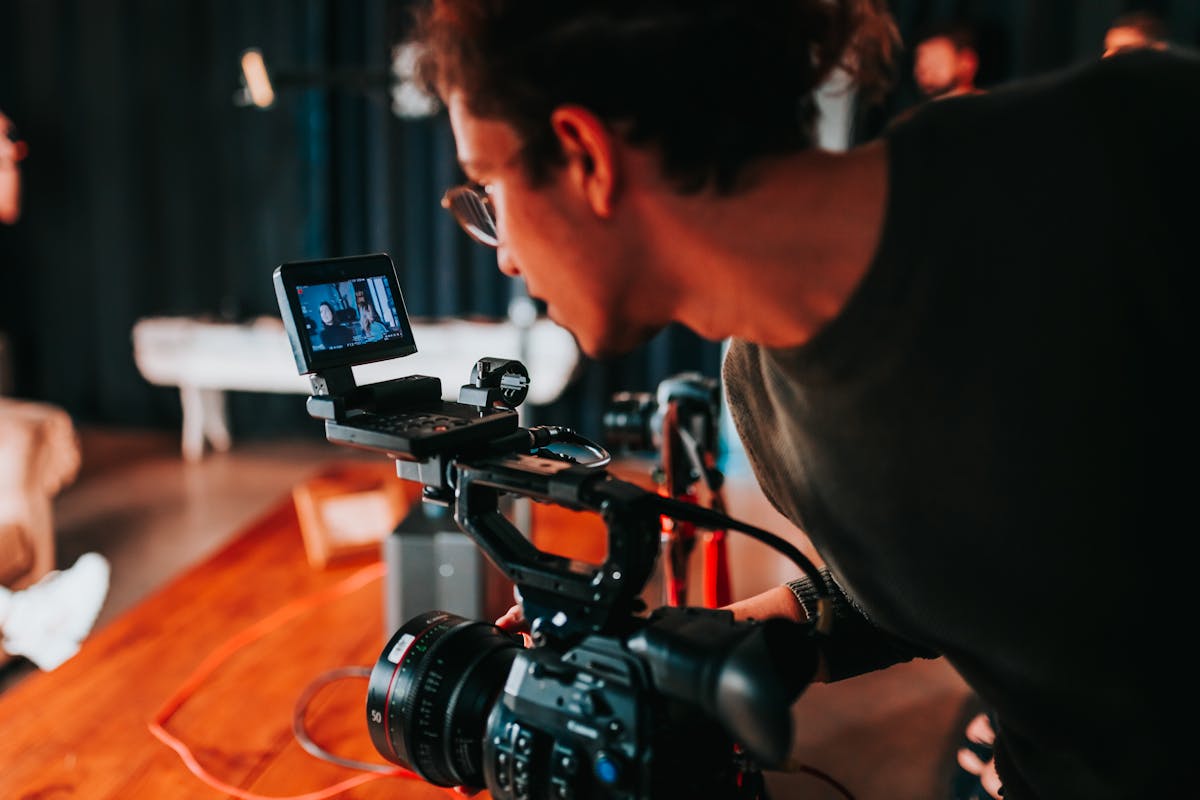 Photo by Matheus Bertelli on Pexels
1. Project Brief and Location Assessment
Before any flying, we define the creative and logistical parameters:
- Creative objectives: What story does the aerial footage serve? How does it integrate with ground-based content?
- Shot list: Specific shots, movements, and durations mapped to the creative brief
- Location details: Address, OS grid reference, access arrangements, altitude constraints
- Timing requirements: Date, time of day (golden hour preference), weather contingency windows
- Integration: How aerial footage cuts with ground camera coverage, existing assets, and editorial structure
We then assess:
- Airspace classification: Using NATS Aeronautical Information Service and CAA charts to determine what permissions are needed
- Flight restrictions: Proximity to airports (Heathrow, City, Gatwick, Luton, Stansted all affect Greater London), heliports (Battersea, London Heliport), and restricted airspace zones (Hyde Park, City of London)
- Physical obstacles: Power lines, cell towers, cranes, tall buildings affecting line-of-sight requirements
- Public access: Pedestrian traffic patterns, event crowds, road closures affecting safety cordon planning
2. CAA Permissions and Risk Assessment
For complex London operations, we manage the full permissions pipeline:
- Controlled airspace requests: Applications to NATS for operations within London's controlled zones, typically requiring 2-4 weeks lead time
- Property permissions: Written consent from landowners covering take-off, landing, and overflight
- Operational risk assessment: Documented safety planning compliant with CAP 722 and CAP 722A
- Weather contingency: Minimum two backup dates for every booking plus real-time monitoring
- Insurance verification: Current certificate provided to all stakeholders before flight day
Most London locations require some form of explicit permission due to overlapping airspace restrictions and high population density.
3. Filming Day
On the day, our process includes:
- Pre-flight checks: Equipment inspection, firmware verification, compass calibration, battery health assessment
- Site safety brief: For all crew, clients, and any on-site personnel covering the flight zone and emergency procedures
- Weather assessment: Final go/no-go decision based on wind speed, visibility, precipitation, and NOTAM updates
- Flight operations: Executing the planned shot list with real-time monitoring
- Client viewing: Live feed to ground station monitor so you see exactly what the camera captures
- Backup capture: Multiple takes of critical shots, plus safety passes at lower altitude
Typical shooting day: 4-8 hours depending on number of locations, airspace complexity, and shot count.
4. Post-Production
Aerial footage is edited and graded to integrate seamlessly with your project:
- Colour grading: Matching aerial footage colour temperature and exposure to ground camera coverage
- Stabilisation: Final smoothing of any residual movement, particularly for long-lens shots
- Speed ramping: Dramatic slow-motion or time-lapse where the creative calls for it
- Integration: Cutting aerial coverage with ground-based footage into the editorial timeline
- Horizon correction: Ensuring consistent level horizon across all delivered shots
5. Delivery
We provide:
- Multiple formats: 4K ProRes masters plus H.264/H.265 web-optimised versions
- Platform-specific cuts: 16:9 landscape, 1:1 square, 9:16 vertical as required
- RAW footage: Optional delivery of ungraded D-Log/RAW originals for in-house editing
- Project files: For clients with internal post-production capability
Aerial Filming Costs in London
Day Rates
| Service Level | Day Rate | Equipment Tier | What's Included |
|---|---|---|---|
| Basic | £800-1,200 | Mavic 3 series, single operator | Half-day shoot, single drone, edited highlights, standard permissions |
| Professional | £1,500-2,000 | Inspire 3, operator + spotter | Full day, cinema-grade drone, ProRes delivery, colour grading, complex permissions |
| Premium | £2,000-2,500+ | Inspire 3 + FPV + heavy-lift, operator + spotter + camera op | Multi-drone, complex airspace (Zone 1-2), RAW delivery, full post-production |
Factors Affecting Cost
- Location complexity: Central London (Zones 1-2) requires multiple overlapping permissions and typically adds £200-400 to a shoot day
- Airspace restrictions: Controlled airspace operations require NATS coordination and add planning time (costed into the rate)
- Number of locations: Each additional location requires separate risk assessment and permissions. Plan on 2-3 locations maximum per shoot day
- Drone camera package: Cinema-grade payloads (Sony FX6, RED Komodo on heavy-lift) cost more than integrated camera drones
- Post-production: Colour grading, stabilisation, speed ramping, and format delivery are included; VFX and compositing are quoted separately
- Licensing: Usage rights for broadcast advertising differ from internal/corporate use and affect the day rate
What's Typically Included
Our aerial filming day rates include:
- The operator, permissions and insurance that apply to the proposed flight, confirmed in the quote
- Professional drone with 4K+ cinema camera
- All airspace permissions, NATS clearances, and NOTAM submissions
- On-site safety management and risk assessment documentation
- Full post-production: editing, colour grading, stabilisation, format delivery
- 3-5 final edited deliverables per shoot day
UK Drone Regulations for Commercial Filming
Understanding the regulatory framework helps you brief projects realistically and select competent operators. Key points from the CAA Air Navigation Order and CAP 722:
The Drone Code
All commercial operators must comply with the CAA Drone Code:
- Maximum altitude: 120m (400ft) above ground level without specific CAA authorisation
- Visual line of sight must be maintained at all times; extended VLOS requires additional CAA operational authorisation
- Distance from people: minimum 30m from uninvolved persons (A2 CofC), 50m (standard permissions), or 15m in congested areas with GVC
- Airport proximity: 5km Flight Restriction Zone around protected aerodromes; operations within FRZ require explicit air traffic control permission
- Flight restriction zones: Check for temporary restrictions (events, VIP movements, emergency incidents) via NOTAM and the Drone Assist app before every flight
Open Category vs Specific Category
Since January 2026, UK drone regulations follow the UK-specific framework:
- Open Category (A1-A3): Lower-risk operations with sub-25kg drones. Covers most commercial filming in uncongested areas with standard CAA authorisation.
- Specific Category: Operations requiring CAA Operational Authorisation. Covers flights in congested areas (most of London), flights beyond visual line of sight, and operations with larger drones.
- Certified Category: Highest-risk operations. Rarely relevant to video production.
Virtually all professional London drone filming falls under the Specific Category, requiring GVC certification and an Operational Authorisation from the CAA.
London-Specific Considerations
London's airspace is uniquely constrained:
- Heathrow flight paths: Arrival and departure corridors cover much of West London. Drone operations in these areas require NATS coordination and may be restricted during peak arrival/departure windows.
- London City Airport: The 5km FRZ covers Canary Wharf, Stratford, and much of East London. Operations inside the FRZ require LCY ATC permission.
- Battersea Heliport: Central London helicopter traffic with its own restriction zone affecting operations in Chelsea, Battersea, and Wandsworth.
- Royal Parks: Hyde Park, Regent's Park, Greenwich Park, Richmond Park all require specific written permission from The Royal Parks agency for take-off and landing.
- Thames corridor: The river acts as a natural helicopter route. Low-altitude drone flights near the Thames require additional risk mitigation.
- Congested area classification: Almost all of Greater London is classified as a "congested area" under CAP 722, triggering Specific Category requirements.
For comprehensive regulatory guidance, read our complete UK drone regulations guide.
FAQs About Aerial Filming in London
Do I need permission for drone filming in London?
Yes, for any commercial operation. At minimum you need a CAA Operator ID and Flyer ID. For London specifically, most locations also require one or more of: airspace clearance from NATS, landowner permission for take-off/landing, local authority notification, Royal Parks permission (if applicable), and specific operational authorisation if within controlled airspace. Professional operators manage this entire permissions pipeline; it is not something you should expect to navigate yourself when hiring drone services. Always ask your operator which permissions are needed for your specific location and request to see the documentation.
How far in advance should I book aerial filming?
Allow 2-3 weeks minimum for straightforward suburban locations with limited airspace restrictions. For Zone 1-2 central London locations, allow 4-6 weeks: the NATS airspace clearance process alone takes 2-4 weeks, and property permissions from large London estates (Canary Wharf Group, The Crown Estate, Grosvenor) have their own approval timelines. Last-minute bookings are occasionally possible for locations with pre-existing permissions, but expect a 25-40% premium for rush coordination. The most common problem we see is clients booking the shoot date but not allowing enough lead time for the permissions to clear.
What weather conditions are needed for aerial filming?
Safe flight conditions require wind under 15mph (ideally under 12mph for longer focal lengths), no precipitation, and visibility above 5km. Light cloud cover is actually preferable to direct, harsh sunlight; it creates even, flattering light without harsh shadows that drone-mounted cameras struggle to expose for. We actively monitor forecasts via aviation-specific weather services in the 72 hours before a shoot and maintain a go/no-go decision framework agreed with the client in advance. Every booking includes at least two weather contingency dates. We never fly in conditions that compromise safety or deliver substandard footage.
Can you fly near airports and in built-up areas of London?
Yes, where the location and flight allow. The operator, permissions and insurance that apply to the proposed flight are confirmed in the quote. For airport-proximate locations, we coordinate directly with air traffic control (typically NATS at Swanwick for Heathrow/Gatwick/Stansted/Luton, or the individual airport ATC for London City). Each operation requires a specific permission, is time-bounded, and comes with altitude and positional constraints. Every location is assessed individually, and some requests cannot be accommodated during peak air traffic periods.
What happens if weather prevents filming on the scheduled day?
Every booking includes weather contingency built into the schedule. We consult aviation-specific forecasts (not consumer weather apps) at T-72h, T-24h, and T-3h before the call time. If conditions exceed our safety parameters (sustained wind above 15mph, precipitation in the forecast, visibility below 5km) we postpone at no additional cost. The rescheduled date uses one of the pre-agreed backup slots. If all backup dates are lost to weather (rare, but can happen in December-February), we roll to the next available window. You only pay for the shoot that actually happens.
Do you combine aerial with ground-based filming?
Yes, and this is the configuration that produces the strongest results. Pure aerial-only shoots are useful for specific applications (roof surveys, single establishing shots), but the best video content integrates aerial perspectives with ground-based coverage. We offer complete production services including ground cameras, audio, lighting, and full post-production, handling the entire shoot as a single project rather than coordinating separate aerial and ground crews. This ensures consistent colour grading, editorial continuity, and crew coordination. See our corporate video production services for the full production picture.
How does the UK's drone classification system affect insurance and liability?
Since the UK left EASA, the CAA maintains its own classification system under the Air Navigation Order. For insurance purposes, the critical distinction is between Open Category (lower-risk, standard insurance) and Specific Category (higher-risk, enhanced insurance). London operations almost always fall under Specific Category due to the congested area classification, which means your operator must carry Enhanced Public Liability coverage (typically £5M minimum for central London). Ask to see the operator's CAA Operational Authorisation document; it specifies exactly what operations they're authorised to conduct. An operator authorised only for Open Category operations cannot legally fly in most of London, and their insurance would be void if they attempted to.
Why Choose Airframe Media for Aerial Filming?
At Airframe Media, we bring together specialist drone expertise and full-service video production capability:
- Permissions scoped per flight: the operator, permissions and insurance that apply to the proposed flight are confirmed in the quote
- Cinema-grade equipment: DJI Inspire 3, Mavic 3 Cine, FPV, and heavy-lift platforms carrying Sony/RED cameras
- Complete production: Aerial integrated with ground-based filming, audio, lighting, and full post-production
- Creative direction: Filmmakers who understand that every aerial shot must serve the story, not just showcase the drone
We're not just drone pilots; we're filmmakers who fly. Every aerial shot is conceived and executed in service of the production's creative goals.
For examples of our work, see our drone filming services page for aerial cinematography across London, our guide to event filming in London, and our corporate video production approach.
Next Steps
Ready to add aerial perspectives to your next production?
- Share your brief: Tell us about your project, locations, and creative objectives
- Site assessment; We'll evaluate airspace constraints, permissions requirements, and feasibility
- Detailed proposal: Timeline, shot list, equipment package, and all-in cost
- Booking: Secure your preferred dates with deposit
Contact us for a free feasibility assessment, or explore our portfolio to see examples of our aerial work across London.
Related guides: UK Drone Regulations Guide | Event Filming London | Corporate Video Production London
ABOUT THE AUTHOR
Founder & CEO
Liam founded Airframe Media in 2015 and leads creative direction across the studio. His work spans corporate, commercial, and event films for UK businesses including Levy, Taylor Wimpey, and ExCeL London, and he writes about professional video production in London.
TAGS
Related Services
Ready to Bring Your Vision to Life?
Let's discuss how our video production services can elevate your brand