Inside a London Corporate Video Shoot Day

A London corporate video shoot day runs 8–12 hours: 60–90 minutes setting up lighting and audio, three to four hours of interviews and B-roll, an hour for lunch and battery swaps, then two to three hours of pickup shots and wrap. Expect 4–6 crew, three to five locations, and a deliverable that's still rendering after wrap. This guide walks through what actually happens, hour by hour, before, during, and after the shoot.
If you're scoping the production work itself rather than the day-of timeline, our corporate video production services page covers package options, pricing, and what each tier includes.
What "shoot day" actually means
For a corporate video, the shoot day is the most visible part of a 4–6 week process. It's also the most expensive single day on the schedule: every hour of crew time, every location release, and every decision about what gets covered first sits on top of weeks of preparation. The shoot day is when the brief becomes footage, but the result depends almost entirely on what was decided before anyone arrived on set.
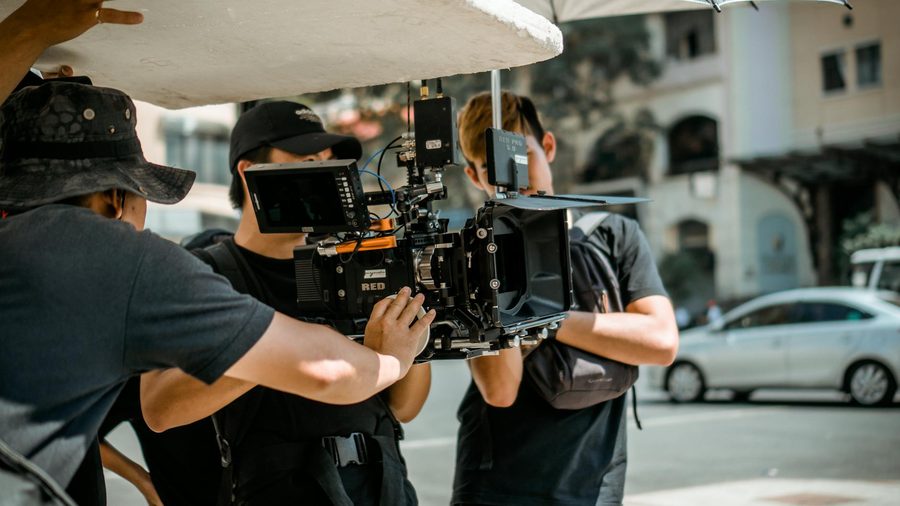
A typical corporate film shoot in London involves:
- Crew of 4–6: director, camera operator (often two), sound recordist, gaffer/spark, and a producer or 1st AD running the schedule
- Three to five locations: typically a head-office reception, two interview rooms, one boardroom or open-plan area, and an exterior establishing shot
- 8–12 hours on the clock: from kit unload to the last hard drive backup
- Six to twelve interview subjects: senior leaders, customer-facing staff, and one or two subject-matter experts
What you don't see, but should know about: the scout, the technical recce, the call sheet, the location releases, the model release forms, the dietary requirements list, and the contingency plans for traffic, weather, fire alarms, and IT outages.
Two to four weeks before shoot day
Pre-production sets the entire shoot up to succeed. The work compresses dramatically as the date approaches.
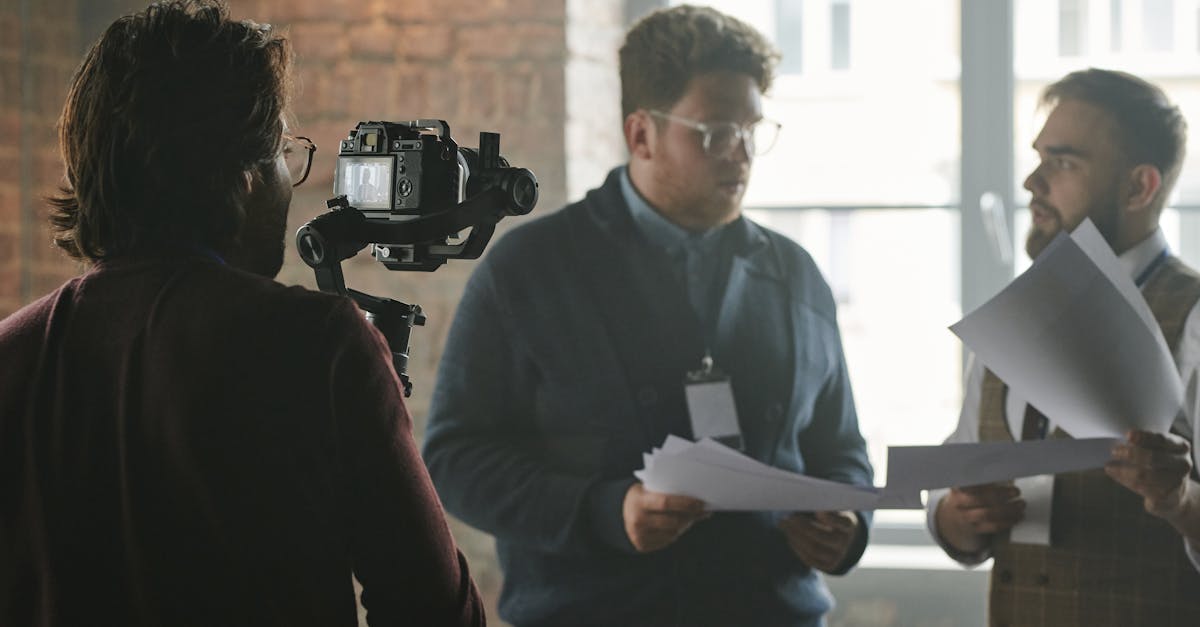
Three weeks out: The director and producer review every interview question with the brand or comms lead. Rewrites happen here, not on the day. The 1st AD locks the call sheet, addresses, parking, contact numbers, kit lists, weather forecast, and a minute-by-minute schedule.
Two weeks out: A technical recce of every location. The crew checks ceiling height, available daylight, mains sockets, ambient noise (printers, server hum, lift shafts, train lines), and where to stash kit between setups. London offices average more reflective surfaces and worse natural light than crews working in purpose-built studios are used to, which means recce time saves shoot-day time.
One week out: Final approvals on questions, location releases signed, model releases prepared, kit pulled and tested, and confirmation that the building has signed in the crew. If the building is in the City, Westminster, or Canary Wharf, the producer also confirms the security team is briefed for kit cases through the door.
Day before: Kit packs at the production company, batteries on charge overnight, drives wiped and labelled, and a final weather check. The 1st AD sends the call sheet to every contributor at 17:00 the day before, not earlier, because senior contributors don't read it twice, and not later, because they need time to ask questions.
Inside a typical shoot day, hour by hour
What follows is a representative London corporate film shoot day. Yours will vary; the rhythm rarely does.
06:30, crew call
The crew arrives 90 minutes before the first contributor. London-specific reality: parking. Most central London offices have no on-site parking for production vehicles, which means a single crew van costs £40–£100 per day in the nearest NCP, plus a 15-minute walk with case trolleys. Some buildings won't allow trolleys through the main reception, which means a goods lift booking the producer secured two weeks earlier.
07:00, kit-up and lighting setup
Kit comes out of cases, lights go on stands, sound is patched in. The first interview room is usually a boardroom: full lights for the subject, a kicker on the background, two cameras (one on the subject, one on the listener for cutaways), and lavalier mics with a backup boom. Setup runs 45–60 minutes for a standard interview, longer if the room has windows facing south.
08:30, first contributor arrives
The producer greets the first contributor 15 minutes before their slot. Coffee, small talk about the questions, a brief on what the camera will see, and a final mic check. Senior contributors get a 15-minute window to read through the questions; junior contributors get five minutes and a friendly conversation to settle nerves.
09:00, first interview
Each interview block runs 30–45 minutes for a 90–120 second final cut. The director leads, the camera ops watch focus and exposure, the sound recordist watches levels, and the producer watches the time. Interviews finish on time because the next contributor is already in the building.
11:30, first location move
The crew strikes the first room and moves to either a second interview room or a B-roll location. Move time is 30–45 minutes for a standard relocation, depending on lift availability and how far the kit has to travel. In a multi-floor London office, a "five-minute move" is usually 25.
12:30, lunch
Crew break for 45 minutes. While the team eats, the producer reviews dailies on a laptop, checks the schedule against reality, and confirms the afternoon contributors are still attending. This is also when re-recordings get flagged and added to the afternoon schedule.
13:30, second interview block
Two to three more interviews back-to-back. By mid-afternoon, the crew has a rhythm: setup is faster, mic placement is muscle memory, and the director is asking sharper follow-ups because they've heard half the answers already.
16:00, B-roll and cutaways
Once interviews are done, the crew shoots B-roll: people working, hands on keyboards, walking shots in corridors, the entrance plate, a wide of the office, and any product or process detail the brief calls for. B-roll is unglamorous but it's what carries the edit.
17:30, exteriors and wrap
If the brief includes an exterior establisher, the crew steps outside for the magic-hour shot. London winter shoots have a 16:00 sunset, which means exteriors get scheduled first, not last. Summer shoots have until 21:00, which means the producer protects against scope creep ("while we're here, can we get a quick…").
18:30, strike and dailies
Kit goes back in cases, drives back up on-site to a shuttle drive, and the producer signs out with the building. Total day: 12 hours from crew call. The director debriefs the camera ops and the sound recordist. Dailies travel back to the production house with the producer that evening.
Two to four weeks after wrap, what happens in post
Day one is just the start of what gets delivered. Editorial follows a fixed shape, even if the timeline varies by project size.
Days 1–2: Footage ingests, gets organised, transcoded for editorial, and backed up in two places (production house and an off-site copy). On a typical project, 8–12 hours of shoot-day footage produces 2–4TB.
Week 1: First assembly. The editor pulls selects from interviews against the script outline, drops in B-roll, and produces a rough cut at 1.5–2x final length. No music, basic colour, no graphics, this is about story.
Week 2: First client cut. The producer reviews internally, then sends to the client with timecodes for feedback. Two rounds of revisions are standard; some projects need three.
Week 3: Picture lock, then colour grade, sound mix, music licensing, and motion graphics get layered in. Lower-thirds, end cards, and title cards happen here.
Week 4: Final delivery. Master file, social cuts (16:9 / 9:16 / 1:1), web-optimised exports, and any subtitle files. Final invoices issue on delivery.
What can go wrong on a London shoot day
Even well-prepared shoots run into trouble. The most common London-specific issues:
- Building access denied at reception: producer's mobile, security manager's mobile, and the comms lead's mobile are all on the call sheet for this reason
- Fire alarm test: every London office building has them, usually on a fixed weekday morning. Producers ask. If the building won't say, expect an alarm at some point during the day
- Air-conditioning hum: clean dialogue requires HVAC off in interview rooms. Most London offices won't switch air handling off without a facilities request 48 hours in advance
- Last-minute contributor cancellations: a senior leader's diary moves on the morning of the shoot. Producers always have a B-list of contributors warmed up
- Traffic and tube delays: contributors arrive late. The schedule absorbs 30–60 minutes of float for this; beyond that, the day compresses
Experienced crews don't avoid these problems, they plan for them.
How shoot day differs by film type
Not every shoot follows the rhythm above. Some examples:
Brand film with talent: A scripted brand film with a paid presenter or actors front-loads the day with rehearsal and blocking, then runs scenes back-to-back. Day starts at 06:00, wrap by 19:00, with a hair-and-makeup truck in the schedule.
Event film: A live event shoot moves with the event, not on a fixed schedule. Crews arrive 4 hours before the keynote for a sound check, run cameras through every session, and stay an hour past the last attendee leaving.
Animation reference shoot: Where the final film is animated but the studio needs reference footage for character animation, the day is shorter (4–6 hours) but extremely scripted. Every shot is storyboarded; the director spends most of the day measuring movement timing.
Multi-day projects: Anything over a single day uses different math. Day one is usually setup and the most complex location; day two is interview-heavy; day three is wrap and pickups. Most importantly, the producer's job on a multi-day shoot is to keep momentum without burning out the crew.
How you can make shoot day faster
If you're commissioning a corporate video, the three things that compress shoot day most:
- Lock the schedule early: contributors confirmed two weeks out, with mobile numbers, dietary requirements, and a confirmed slot they've personally agreed to
- Write tight questions: 4–6 questions per contributor, briefed in advance. Sprawling question lists produce sprawling interviews
- Pick one approver: shoot day is not the day for committee feedback. One person on-site has final say on creative; everyone else gets the cut on Friday
For more on how to brief a shoot before it gets to the day, see our video production brief template and our pre-production checklist.
Frequently asked questions
How long does a London corporate video shoot day take?
A typical London corporate video shoot day runs 8–12 hours from crew call to wrap. Crews arrive 60–90 minutes before the first contributor for kit setup, conduct interviews and B-roll across the working day, and spend 60–90 minutes on strike and dailies at the end. Multi-day shoots break into setup, interview, and pickup days.
How many crew are needed on a corporate film shoot?
Most London corporate film shoots use 4–6 crew: director, one or two camera operators, a sound recordist, a gaffer or spark for lighting, and a producer or 1st AD running the schedule. Smaller interview-only shoots can run with three crew; brand films with talent can need 8–12.
What time does a London corporate video shoot start?
Crew call is usually 06:30–07:00, with the first contributor on camera by 09:00. The two-and-a-half-hour gap is for parking, kit-up, lighting setup, sound checks, and a buffer for any London-specific access issues like locked goods lifts or unbriefed security teams.
What goes wrong on London corporate video shoots?
The most common issues are building-access problems, scheduled fire alarm tests, HVAC noise in interview rooms, last-minute contributor cancellations, and traffic delays. Experienced producers plan for all of these with B-list contributors, facilities requests for HVAC, and 30–60 minutes of schedule float.
What happens to the footage after the shoot day?
Footage is ingested and backed up the same evening, with editorial starting the next day. A first assembly takes about a week, the first client cut another week, picture lock and finishing one or two weeks after that. Total post-production usually runs 3–4 weeks for a single-shoot-day corporate film.
Ready to plan a shoot day?
If you want a fixed quote and a production team that runs the schedule end to end, see our corporate video production services for package options. If you'd rather start with the brief, contact Airframe Media and we'll send a project plan within one working day.
ABOUT THE AUTHOR
Founder & CEO
Liam founded Airframe Media in 2015 and leads creative direction across the studio. His work spans corporate, commercial, and event films for UK businesses including Levy, Taylor Wimpey, and ExCeL London, and he writes about professional video production in London.
TAGS
Related Services
Ready to Bring Your Vision to Life?
Let's discuss how our video production services can elevate your brand