Case Study Video Production London 2026
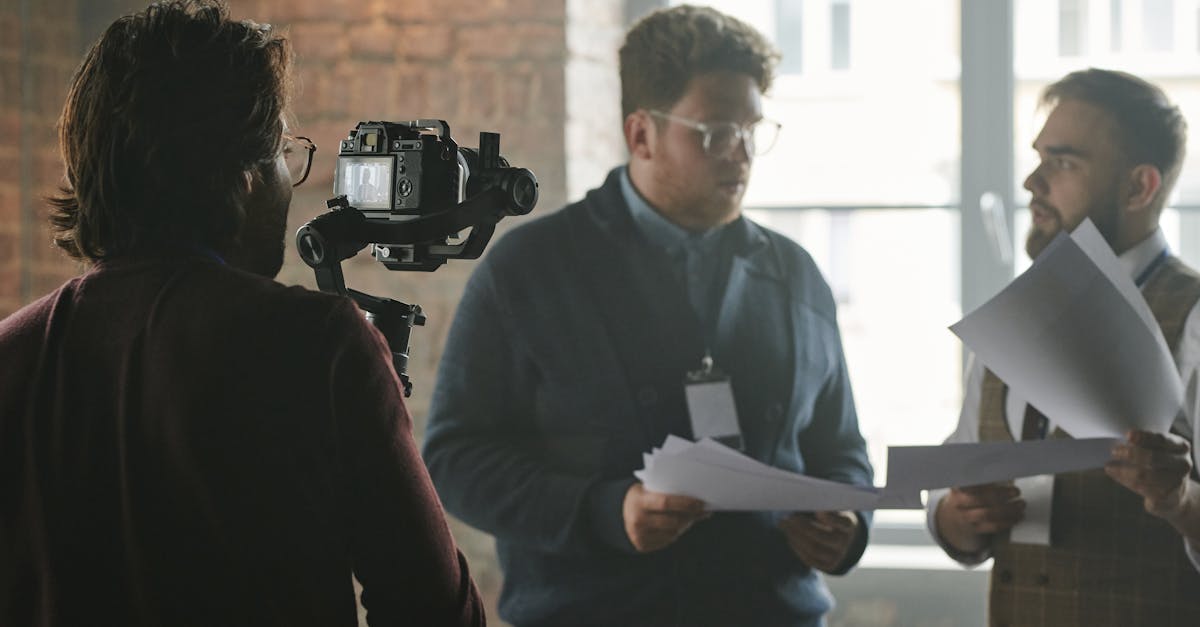 Photo by Henri Mathieu-Saint-Laurent on Pexels
Case study video production captures a real customer's experience with your product or service, structured as a challenge → solution → result narrative. In London, case study videos typically run 90 seconds to 3 minutes and cost £3,000–£18,000 depending on interview count, B-roll scope, and motion graphics. They are the highest-converting format in B2B video marketing because they substitute real-world proof for marketing claims.
Information Gain — data most case-study pricing guides don't cite:
- Conversion data from B2B video benchmarks: According to Wyzowl's 2026 State of Video Marketing survey, 77% of B2B buyers say a case study video influenced a purchasing decision in the last 12 months — up from 62% in 2024. Video case studies convert at roughly 3× the rate of written case studies when placed on a landing page with a clear CTA.
- London-specific production economics: A single-interview case study with one filming location in London typically takes 2–3 weeks from brief to delivery. The cost-saving lever most buyers overlook is shooting multiple case studies in a single production block — filming three clients in one day at a central London hotel meeting room cuts per-video costs by 40–50% compared to three separate shoot days.
What Is a Case Study Video?
A case study video documents a real client engagement from challenge to outcome. Unlike a testimonial video — which is typically a single talking-head interview — a case study video weaves together interview footage, observational B-roll, and motion graphics into a narrative that shows the problem, the solution, and the measurable result.
The format originates in B2B marketing, where procurement decisions involve multiple stakeholders who need evidence — not promises. A well-produced case study video gives your champion inside the buying organisation the ammunition to convince finance, legal, and the C-suite that you deliver what you sell.
A typical structure follows a three-act arc:
- The Challenge: What problem was the client facing? Set the scene with context and stakes.
- The Solution: How did your product or service solve it? Show your process, not just the outcome.
- The Result: What changed? Where possible, include specific metrics — percentage increase, time saved, revenue impact.
Types of Case Study Videos
Interview-Led Case Study (Most Common)
A single-camera or two-camera interview with the client's key stakeholder, intercut with B-roll of their environment, your product in use, and relevant branded graphics. This is the workhorse format: cost-effective, fast to produce, and versatile across web, sales, and social channels.
Documentary-Style Case Study
A longer-form piece (3–8 minutes) that follows the engagement chronologically, often including multiple interviews, location footage at both the client's site and your own facility, and a more cinematic visual treatment. Best for flagship clients, annual reports, and award submissions where production quality must match the prestige of the relationship.
Comparison Case Study (Before/After)
A split-screen or side-by-side format that explicitly contrasts the client's situation before and after your intervention. Highly effective for products where the transformation is visual — facilities management, construction, design, software UI overhauls — and for audiences who need to see the delta, not just hear about it.
Multi-Client Sector Case Study
Aggregates insights from 3–5 clients in the same sector into a single thematic film. Common in SaaS, professional services, and niche manufacturing where individual clients may not want to be named but sector-wide proof points carry weight. Anonymised data and aggregated metrics preserve confidentiality while still delivering social proof.
For context on how case study video fits into the broader types of corporate videos, our corporate video format guide covers the full landscape.
London Case Study Video Production Costs
| Format | Typical London Cost | Delivery Timeline |
|---|---|---|
| Single-interview case study (1 location) | £3,000–£6,000 | 2–3 weeks |
| Two-interview + B-roll (2 locations) | £6,000–£10,000 | 3–5 weeks |
| Documentary-style (3+ interviews, multi-location) | £10,000–£18,000 | 5–8 weeks |
| Multi-client sector case study (3–5 clients) | £8,000–£22,000 | 6–10 weeks |
These ranges assume a London-based professional production company with experienced crew, professional audio, colour grading, and motion graphics for lower-thirds and branded titles. At the lower end, a single-interview shoot with minimal B-roll and basic post-production. At the upper end, a multi-location documentary-style production with multiple camera angles, licensed music, animated data visualisations, and multiple revision rounds.
Costs in London are driven by crew day rates (£400–£700/day for a skilled camera operator; £350–£550 for a sound recordist), location costs (even a hotel meeting room for filming runs £200–£500/half-day), and post-production time (editing a case study to a professional standard takes 3–7 days depending on complexity). For wider corporate video production pricing in London, our cost guide covers the full format range.
The Case Study Video Production Process
1. Pre-Production (1–2 Weeks)
- Client selection and outreach: Identify the right client — one with a clear measurable result, a compelling story, and willingness to appear on camera. The quality of the client story is 80% of the final video's impact.
- Pre-interview: A 30-minute call with the client stakeholder to surface the narrative arc, identify key quotes, and flag any sensitivities (competitive information, non-disclosure terms, internal politics). This call is the single most important step in the process — it shapes the interview questions and the edit structure.
- Brief and scripting: Write interview questions structured around the challenge → solution → result arc. Prepare a shot list for B-roll: the client's environment, your product in use, team interaction, relevant detail shots.
- Location and logistics: Confirm the filming location (client office, neutral venue, or studio), arrange parking and equipment access, brief the client on wardrobe and what to expect.
2. Filming (1 Day Typical)
A standard single-interview case study shoots in one day:
- Morning: setup and interview. Arrive early for lighting, audio check, and camera positioning. The interview itself typically runs 30–60 minutes. A two-camera setup (wide + close-up) gives the editor options and makes cutaways smoother.
- Afternoon: B-roll capture. Film the client's environment, your product or service in context, team interactions, detail shots of relevant materials, and establishing shots of the location exterior. B-roll is what elevates a case study from a talking-head video to a professional narrative.
- Data backup: Two copies of all footage to separate drives before leaving location.
3. Post-Production (1–3 Weeks)
- Paper edit: Select the strongest interview quotes and arrange them into the narrative arc. This is faster and cheaper than editing blind — a 2-hour paper edit saves a day in the suite.
- Picture edit: Assemble the interview selections with B-roll overlay, pacing the edit to maintain energy while letting key moments breathe. A case study should feel like a story, not an interrogation.
- Motion graphics: Animated lower-thirds introducing the speaker (name, title, company), data visualisations of key results, and branded title cards.
- Colour grading and sound mixing: Consistent skin tones, balanced audio between interview and B-roll sequences, and licensed music that matches the tone.
- Review and sign-off: Two rounds of client review are standard. Involve the featured client in the review — they need to approve how they are represented, and their buy-in speeds internal sign-off.
What Makes a Case Study Video Convert?
Conversion in B2B means moving a prospect from consideration to intent. A case study video influences this transition through three mechanisms:
1. Social proof with specificity. "Company X saved 30% on operational costs using our platform" is evidence. "Our customers love us" is a claim. The former converts; the latter is ignored. The more specific and verifiable the result, the stronger the conversion signal.
2. Peer identification. The viewer must see themselves in the story. If your case study features a Fortune 500 CTO but your prospect is an SME operations manager, the social proof doesn't transfer. Match case study subjects to your target personas — sector, company size, role seniority, and challenge type.
3. Narrative momentum. A case study that states the result in the first 10 seconds and then explains how it was achieved outperforms one that builds slowly to a reveal. B2B buyers are time-poor and sceptical. Lead with the outcome, then earn their attention for the process.
For a downloadable framework that structures every section a video production brief template should cover, including case study briefs, see our free template.
B2B Industry Applications
SaaS and Technology
SaaS case studies are the most common format. They typically feature a customer's Head of Department or CTO explaining how the platform solved a specific operational challenge. Screen-capture B-roll showing the product interface in use is essential. Motion graphics for data visualisation — percentage improvements, time savings, ROI metrics — convert abstract claims into concrete proof.
Professional Services
Law firms, consultancies, and accountancies use case study videos to demonstrate expertise without breaching client confidentiality. Anonymised case studies ("a FTSE 250 manufacturer," "a Magic Circle law firm") are standard. The focus is on process and methodology — how the firm approached the problem — rather than namedropping.
Manufacturing and Engineering
Case study videos in industrial sectors often involve site filming at factories, warehouses, or construction projects. The visual transformation — a production line before and after automation, a facility before and after a refit — does the heavy lifting. Drone aerials establishing the scale of the operation are a common production element.
Healthcare and MedTech
Patient case studies require careful consent management and GDPR compliance. The most effective format is the clinician interview — a consultant explaining how a device or treatment changed patient outcomes — supported by B-roll of the clinical environment. Patient interviews are powerful when available but require additional legal clearances.
For context on how the case study format compares to traditional advertising, see our comparison of how case study video compares to traditional advertising formats — the credibility gap between a paid ad and a genuine client story is the core reason case studies convert.
Choosing a Case Study Video Production Company in London
When evaluating London production companies for a case study video, look beyond the showreel. A beautiful brand film does not prove the company can interview a nervous client stakeholder and draw out a compelling narrative.
Questions to ask:
- "Show me three case study videos you've produced." Not brand films — specifically case studies. Look for narrative structure and authentic interview performance.
- "How do you prepare interviewees?" A good producer knows how to put a non-actor at ease, prompt without leading, and structure an interview to yield usable soundbites.
- "What's your B-roll approach?" Generic office B-roll signals a rushed production. Look for B-roll that is specific to the client's environment and relevant to the story.
- "How do you handle client review and sign-off?" The review process should be structured, with a clear number of rounds and a defined decision-maker.
FAQ
Q: How long should a case study video be? A: A B2B case study video typically runs 90 seconds to 3 minutes. The 90-second version works for social media, email signatures, and landing-page headers — it delivers the key result and a single compelling quote. The 2–3 minute version is for your case studies page, sales presentations, and prospect follow-up — it includes the full narrative arc with context, process detail, and multiple stakeholder perspectives. Videos longer than 3 minutes see significant drop-off unless the content is genuinely documentary-quality. For conference presentations and award submissions, a 4–6 minute documentary-style cut can be effective when the audience is captive and already invested.
Q: How much does a case study video cost in London? A: A single-interview case study video from a London production company typically costs £3,000–£6,000. This includes pre-production (client liaison, pre-interview, question design), a one-day shoot with two-person crew (camera operator and sound recordist/director), and post-production (edit, colour grade, sound mix, basic motion graphics, two revision rounds). A multi-interview documentary-style case study with multiple locations, drone footage, and advanced motion graphics runs £10,000–£18,000. The most effective cost-saving strategy is filming multiple case studies in a single production block — three clients interviewed at the same London venue on the same day cuts per-video cost by 40–50%.
Q: How do you prepare a client for a case study video interview? A: Preparation makes the difference between a wooden interview and a compelling one. Start with a 30-minute pre-interview call to surface the narrative — what was the challenge, how did your solution address it, what changed? Send the interviewee the questions in advance but emphasise they are prompts, not a script. On the day, allow 20–30 minutes for the interviewee to settle, have a conversation rather than conducting an interview, and encourage them to restate the question in their answer so each response works as a standalone soundbite. Avoid coaching them on specific phrasing — authenticity is what makes case study video persuasive, and over-scripted responses read as marketing copy.
Q: What's the difference between a testimonial video and a case study video? A: A testimonial video is typically a single talking-head interview where a client expresses satisfaction — it answers "are your customers happy?" A case study video answers "what did you do, how did you do it, and what was the measurable result?" It includes multiple elements: structured interview footage following a challenge → solution → result arc, B-roll of the client's environment and your product in context, motion graphics for data visualisation, and often multiple stakeholders (the end-user, the budget holder, the executive sponsor). Case study videos are longer, more structured, and more persuasive because they provide evidence rather than endorsement alone. In B2B purchasing decisions where multiple stakeholders need to justify a choice, a case study video gives your internal champion the ammunition they need.
Q: Can we film a case study video at the client's office in London? A: Yes, and it is often the best choice. Filming at the client's premises adds authenticity — the environment is real, not staged. It also reduces the time commitment for the client stakeholder, which increases the likelihood they will agree to participate. The production company will need to assess the space in advance for lighting, audio (background noise, HVAC), and sufficient room for equipment. Some London offices — particularly in the City and Canary Wharf — require building management permission and a certificate of insurance. Most production companies handle this as part of pre-production. If the office environment is not suitable (open-plan with no quiet area, or visually unrepresentative), a neutral venue like a hired meeting room in central London is a practical alternative.
Q: What makes a case study video convert versus one that doesn't? A: Three factors separate high-converting case study videos from the rest. First, specificity: a video that says "we saved Company X 30% on operational costs in 6 months" converts far better than one that says "Company X had a great experience working with us." Second, peer identification: the viewer must recognise their own situation in the story — similar sector, company size, role, and challenge type. A case study about a global bank won't convert an SME manufacturer. Third, narrative structure: leading with the result in the first 10 seconds and then explaining how it was achieved outperforms a slow build. B2B buyers are time-poor and sceptical — earn their attention by proving you understand the outcome they want, then show them how you deliver it.
Ready to create a case study video that converts? Contact our London team for a free consultation on which client stories will have the most impact on your pipeline.
ABOUT THE AUTHOR
Founder & CEO
Liam founded Airframe Media in 2015 and leads creative direction across the studio. He has produced 500+ corporate, commercial, and event films for UK businesses including Levy, Taylor Wimpey, and ExCeL London, and writes about the craft of professional video production in London.
TAGS
Related Services
Ready to Bring Your Vision to Life?
Let's discuss how our video production services can elevate your brand