How to Choose a Video Production Company in London
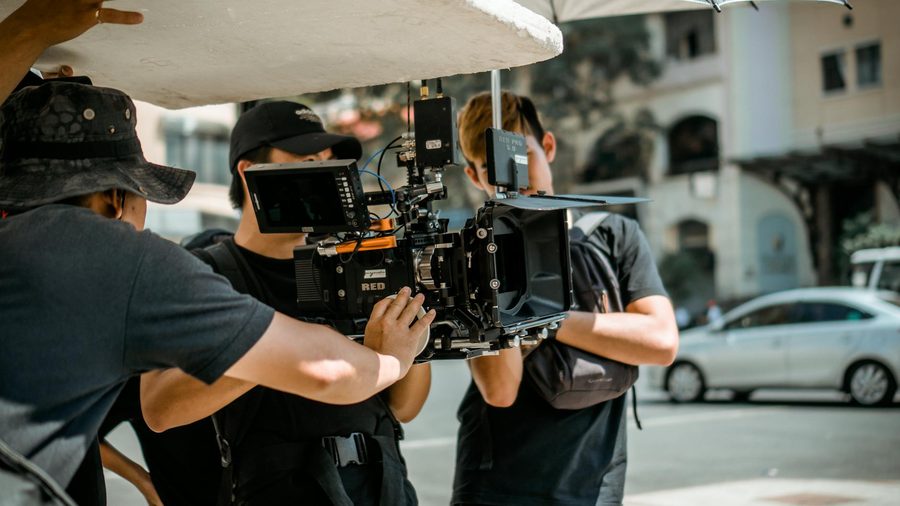
 Photo by Le Minh on Pexels
To choose a video production company in London, compare seven evidence-backed criteria: relevant full projects, a documented process, an itemised quote, the right crew and technical capability, verifiable references, understanding of your audience, and an exact delivery specification. Use the 100-point vendor scorecard below to compare like with like before you appoint a supplier.
A polished showreel is not enough to answer procurement questions. This guide turns the claims in a proposal into evidence you can request, score and verify, while accounting for the permissions and insurance checks that make a London shoot different.
What Most Buying Guides Don't Tell You (London-Specific)
Generic buying guides often miss three checks that can change a London schedule or quote:
- Permission belongs to the location, not the supplier's postcode. Film London explains that all 33 boroughs have their own Borough Film Service, and apparently public spaces may be privately managed. Ask the bidder to name the authority or landowner for every planned camera position and show who owns the application task.
- Insurance thresholds depend on the shoot. Film London's media-insurance guidance says street filming generally requires at least £2 million public liability cover and some areas require £5 million. Westminster asks for at least £5 million per incident and £10 million for large-scale productions. Do not use one blanket number: ask the relevant authority and request the current certificate. Employers with staff must also carry at least £5 million employers' liability cover under UK Government guidance.
- Drone credentials are operation-specific. The Civil Aviation Authority's work-flying guidance requires the operator registration, pilot competency, any applicable Operational Authorisation and appropriate insurance. Ask which operating category applies to the proposed shot rather than accepting a generic "CAA approved" badge.
These are verifiable procurement checks. A credible bid should identify the documents, owner and lead time for each one instead of burying them in a contingency line.
Why the Right Video Production Company Matters
Video production commits budget before the buyer can inspect a finished result. A weak brief or mismatched supplier can leave technically polished footage that does not serve the intended audience or channel.
A polished website tells you very little about what working with a supplier will be like. A repeatable evidence check makes competing proposals easier to compare and exposes missing scope before it becomes a change request.
7 Things to Look for in a London Video Production Company
1. A Portfolio That Matches Your Vision
A showreel tells you what a company can do technically. What matters more is whether they have done work in your sector or with a similar tone to what you need.
Ask to see full projects, not just highlight clips. A 30-second showreel cut makes everything look good. A full case study, covering brief, approach, and final output, shows you how they think. Look for work where the storytelling serves a business goal, not just work that looks cinematic.
A useful filter: ask for two case studies in your sector and one outside it. The in-sector pieces show domain fluency; the outside piece shows whether the company can adapt or whether they only have one creative gear.
Evidence to request: a public full-length film, the written brief or case study, the supplier's exact role, and a client contact who can confirm it. Airframe publishes complete project case studies and films so buyers can inspect more than a reel.
2. Clear Process from Brief to Delivery
Good production companies have a defined workflow. They should be able to explain exactly what happens between your first call and the final file landing in your inbox.
 Photo by Henri Mathieu-Saint-Laurent on Pexels
Key things to clarify upfront:
- How many revision rounds are included
- Who your main point of contact is
- What pre-production looks like (scripting, recce, shot lists)
- How they handle feedback and sign-off
- Whether they hold a recce visit before locking the script
If a company can't describe their process clearly, that's a sign. For more on what the planning stage should involve, see our video production brief guide.
Evidence to request: a sample schedule, named decision owner, feedback route and one redacted production document. Airframe's corporate video production process sets out the stages buyers should expect from brief to master.
3. Transparent Pricing
A single-number quote makes it difficult to compare scope or understand later changes. A reliable company should be able to give you a detailed breakdown.
You should be able to see what you're paying for: crew, equipment, edit time, music licensing, and any extras. If a quote feels unusually cheap, find out what's missing. If it feels high, ask what's included that justifies the cost.
Airframe's corporate video production cost guide explains the assumptions behind its current budget bands; use the scope components rather than treating any headline range as a market tariff. Browse the video production services to identify which stages your brief actually needs.
Evidence to request: an itemised quote separating pre-production, crew, equipment, locations, post-production, licensing, travel, contingency and VAT. It should state the number of filming days, edit days, versions and revision rounds.
4. Equipment and Technical Capability
The gear doesn't make the video, but it sets the ceiling for what's possible. Ask about:
- Camera systems (cinema cameras like RED, ARRI, or Sony FX series are standard for professional work)
- Lighting kits (controlled lighting separates professional from amateur)
- Audio recording (lavalier mics, boom, and backup recording)
- Post-production capability (colour grading, motion graphics, sound design)
- Drone operator registration, pilot competency, insurance and any applicable Operational Authorisation if aerial work is in scope
Owned equipment is not automatically better than hired equipment. The useful question is whether the proposed kit is available, insured, appropriate to the location and supported by a backup plan. Ask which named crew and suppliers are confirmed, and which are provisional.
Evidence to request: a project-specific kit list, backup plan, insurance certificate and aerial documents where relevant. Airframe publishes its current accreditation, insurance and document-request route; the commissioning team should still verify that the certificate and scope match the proposed shoot.
5. Client References and Reviews
Google reviews and testimonials on a website are a starting point, but direct references are better. Ask for contact details of a recent client with a similar project scope.
Questions to ask references:
- Did the project deliver on time and on budget?
- How did they handle unexpected issues on set?
- Would you work with them again?
- Was communication clear throughout?
- What surprised you about working with them, positively or negatively?
That last question is the one that gets you the truth. The first four are easy to soft-pedal; the fifth is harder to dodge.
Evidence to request: a recent reference for comparable scope, plus permission to verify the referee independently. A testimonial without a named source or a way to confirm the project should not earn the same score as a checked reference.
6. Creative Understanding of Your Brand
 Photo by cottonbro studio on Pexels
Technical quality cannot compensate for a film aimed at the wrong audience or channel. During initial conversations, pay attention to whether the supplier asks about:
- Who the video is for (not just what it's about)
- Where it will be distributed
- What success looks like for your business
- Your brand guidelines and tone of voice
- The KPI the video has to move (lead volume, training completion, recruitment applications)
The right company asks more questions than they answer in the first meeting.
Evidence to request: a short written response that identifies the audience, desired action, distribution channel and success measure in the supplier's own words. This reveals whether they understood the brief or merely repeated it.
7. Post-Production and Delivery
Post-production is where raw footage becomes a finished product. Understand what's included:
- How many cuts or versions you'll receive
- Turnaround time from shoot to final delivery
- File formats and resolutions provided
- Whether social media cutdowns are included or extra
- Music licensing (royalty-free library vs custom composition)
- Captioning / subtitle deliverables (separate .srt vs burned-in)
- Long-term archival policy on the master files
Revision policies vary. Know the included rounds, what counts as one round, who consolidates feedback and the cost of a scope change before signing.
Evidence to request: a deliverables schedule naming duration, aspect ratio, resolution, captions, audio mix, file format, music usage, archive period and acceptance process for every version.
Questions to Ask Before Hiring
Before committing, have direct answers to these:
- Budget fit: "What does a project like mine typically cost?" A good company will give you a range before detailed scoping.
- Timeline: "Which dates and people can you confirm now, and which remain provisional?" Ask for dependencies and the last safe approval date.
- Process: "How do you handle revisions?" Confirm the included rounds, feedback owner and change-control route.
- Team: "Who will be on set and in post?" Know whether your project gets the senior team or gets handed to juniors.
- Rights: "Which rights transfer to us, when do they transfer, and which music, talent, location or stock licences remain restricted?" The contract should match your intended use.
- Insurance: "What public liability cover do you carry, and does it meet the location owner's requirement for this shoot?" Request the certificate and verify the insured name, activity, limit and dates.
Vendor scorecard: compare London production companies
Score each supplier from 0 to 5 against the evidence requested, then multiply by the weighting. A promise with no supporting document scores 0; clear, project-specific and independently checkable evidence scores 5. The final weighted score is out of 100.
On a smaller screen, swipe across the scorecard to compare all four columns.
| Criterion | Weight | What earns full marks | Evidence to request |
|---|---|---|---|
| 1. Relevant full work | 20 | Comparable full films with the supplier's role and business purpose explained | Film, case study and client verification |
| 2. Production process | 15 | Named owner, milestones, approvals and change-control route | Schedule and redacted production document |
| 3. Itemised commercial scope | 20 | Like-for-like assumptions, exclusions, contingency and VAT | Line-item quote and deliverables list |
| 4. Crew, kit and compliance | 15 | Confirmed people, appropriate equipment, backup plan and current documents | Crew list, kit list, insurance and permits |
| 5. Verifiable references | 10 | Recent comparable client willing to confirm delivery | Independently checked contact |
| 6. Audience and brand understanding | 10 | Proposal identifies audience, action, channel and success measure | Written response or treatment |
| 7. Post-production and delivery | 10 | Exact versions, revisions, rights, formats, accessibility and archive terms | Delivery schedule and licence terms |
Do not let the total hide a critical failure. Missing insurance for the location, unclear rights, an unconfirmed key crew member or a quote that excludes a required deliverable is a stop condition even when the numeric score is high.
Freelance Videographer vs Production Company
Not every project needs a full production company. Here's when each makes sense:
| Factor | Freelance Videographer | Production Company |
|---|---|---|
| Best for | Event coverage, social clips, simple interviews | Multi-day shoots, scripted content, brand films |
| Quote basis | Often a day rate plus named deliverables | Usually a project scope across several roles and stages |
| Team size | 1 person | 3-10+ crew |
| Post-production | Basic editing | Full suite: grading, motion graphics, sound design |
| Project management | You manage the process | Dedicated producer handles logistics |
| Insurance and compliance | Verify against the actual person and shoot | Verify against the actual company, crew and shoot |
For straightforward projects such as a conference recap, a talking-head interview, or social media content, a skilled freelancer delivers excellent value. For anything involving scripting, multiple locations, or complex post-production, a production company brings the structure and team depth you need. If your project involves animation, our animation and explainer video production service covers 2D, motion graphics, and whiteboard formats with the same structured production process. For multi-camera conferences, awards and launches, see our event video production in London; when a remote audience needs to watch live, our live streaming services in London cover the stream as well as the recording.
Read our full guide to hiring a London videographer for detailed rates and what to look for. For a deeper read on the corporate video production process end-to-end, our services page maps every stage from discovery to delivery.
A production company is a good fit when
- the project needs a producer to coordinate several stakeholders, locations or filming days;
- scripting, casting, location management, motion graphics, colour, sound or multiple delivery formats need one accountable owner;
- the commissioning team needs procurement documents, risk planning and a clear approval chain;
- the work must stay consistent across a campaign rather than one standalone capture.
Airframe is positioned for this kind of managed production. Buyers can inspect the corporate production approach, review finished project evidence and request current documents through the accreditations and insurance page. If the scope matches, contact the team with your brief for an itemised response.
A smaller crew or freelancer may be a better fit when
- the brief is a contained one-camera interview, simple event record or a small set of social clips;
- the buyer can own the schedule, contributor coordination, feedback and file delivery;
- specialist production management or complex post-production would add cost without reducing meaningful risk;
- the supplier can still provide the contract, insurance and rights needed for that exact location and use.
Airframe should not be the automatic choice for every brief. A well-matched freelancer can be the more efficient option when one person can safely own the complete scope.
Red Flags to Watch For
Walk away if you see any of these:
- No written contract: Do not proceed without an agreement covering scope, timeline, payment terms, rights and deliverables.
- Vague pricing: "We'll figure out the cost as we go" is not a pricing model. Get a written quote with line items.
- Generic portfolio: If their showreel looks like stock footage, their work for you probably will too.
- Poor communication: If they're slow to respond before you've hired them, it won't improve after.
- No pre-production: Companies that want to "just turn up and film" skip the most important phase of production. Pre-production planning determines whether the final video serves your business goals. See our pre-production checklist for what proper planning looks like.
- Payment terms without protection: Payment stages should correspond to defined work, cancellation terms and acceptance points. Understand what is refundable before paying.
- Insurance gaps: If current insurance cannot be verified against the planned activity and location, pause the appointment until it can.
Making Your Final Decision
After shortlisting 2-3 companies, use this checklist:
- Portfolio includes work relevant to your industry or style
- Process is clearly defined and documented
- Pricing is transparent with a line-item breakdown
- References check out with recent, similar clients
- They asked about your audience and business goals, not just the video spec
- Contract covers scope, revisions, timeline, and ownership
- You feel confident in the team who will actually work on your project
- Public liability insurance meets the threshold for every borough on the schedule
The right production company should make the process easier, not harder. If conversations feel difficult before the project starts, they won't improve during production. For quick answers to the questions clients ask most often, see our video production FAQ.
Frequently Asked Questions
How much does a video production company charge in London?
There is no single London tariff: price depends on pre-production, crew, filming days, equipment, locations, post-production, versions and usage rights. Compare itemised assumptions rather than headline totals. Airframe's corporate video production cost guide publishes its current budget bands and what they include; other suppliers should explain their own basis just as clearly.
What should I look for in a video production company's portfolio?
Look for work in your industry or with a similar tone to what you want, and pay attention to storytelling quality rather than just technical polish. Ask whether the portfolio pieces actually achieved their stated business objectives, views, leads, conversion, training completion, recruitment applications. Request to see at least one full case study (brief, treatment, final film, outcome) rather than a 30-second showreel cut. A polished reel hides whether the company can deliver a coherent narrative over three minutes; a full case study answers that question directly.
Should I hire a freelance videographer or a production company?
Freelancers can suit contained projects such as simple event coverage, social clips or one-camera interviews. Production companies are usually a better fit when the brief needs several crew roles, locations, stakeholders or specialist post-production under one accountable producer. The decision pivots on scope depth, production risk and how much project-management overhead the buyer can carry internally.
How long does it take to produce a corporate video in London?
Timing depends on approvals, contributor availability, locations, filming days and post-production scope. Ask every bidder for dated pre-production, shoot, first-cut, feedback and final-delivery milestones. Treat permits, location agreements, talent releases and aerial permissions as schedule dependencies rather than assuming they can be added after the shoot date is set.
What insurance should a London video production company carry?
The required public liability limit depends on the location and activity. Film London says street filming generally requires at least £2 million and some areas require £5 million; Westminster asks for £5 million per incident and £10 million for large-scale productions. UK employers generally need at least £5 million employers' liability cover. Aerial work also needs the operator registration, pilot competency, applicable authorisation and insurance required for that operation. Request the current documents and confirm them with the relevant authority.
Do London video production companies own their equipment or hire it in?
Either model can work. Owned kit may simplify availability; hired kit can give a project access to specialist equipment without forcing every brief through the same camera package. Ask for the project-specific kit list, named supplier for hired items, insurance, availability and backup plan. Judge whether the package fits the brief, not whether every item appears on the production company's balance sheet.
What's the difference between a video production company and a creative agency?
A video production company specialises in the craft of producing video: filming, editing, motion graphics, sound design, colour grading. Their strength is execution. A creative agency typically owns the strategic concept, campaign idea, messaging, brand positioning, and either has an in-house production team or contracts production companies to execute their vision. For most direct-to-buyer corporate video projects, a production company with strong creative input is enough. For campaign-led work tied to a wider marketing strategy, an agency-led model often makes more sense, with the production company sitting downstream.
Looking for a London video production company that ticks every box? Contact Airframe Media for a no-obligation consultation. We'll discuss your project, provide transparent pricing, and show you relevant examples from our portfolio.
Explore our full range of video production services to see how we work.
ABOUT THE AUTHOR
Founder & CEO
Liam founded Airframe Media in 2015 and leads creative direction across the studio. His work spans corporate, commercial, and event films for UK businesses including Levy, Taylor Wimpey, and ExCeL London, and he writes about professional video production in London.
TAGS
Related Services
Ready to Bring Your Vision to Life?
Let's discuss how our video production services can elevate your brand