How to Hire a Videographer in London: 2026 Checklist
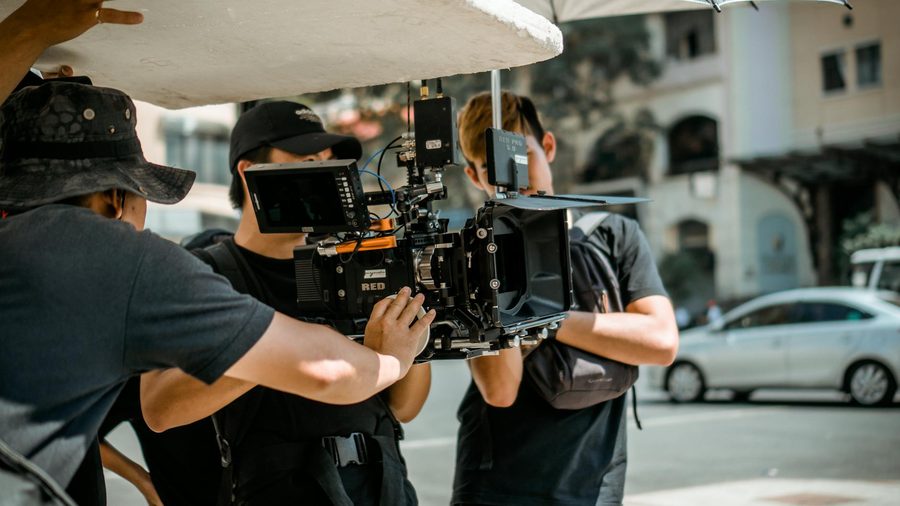
 Photo by George Milton on Pexels
To hire a videographer in London, define the deliverables first, ask for work samples from your sector, and request an itemised quote that separates shoot days, crew, kit, post-production and London costs such as permits and parking. Then check insurance, equipment safety and IP terms before you sign. The checklist below covers each step.
London videographer hire starts with defining your deliverables, not your budget. The right London videographer for a 2-camera conference recording is a different person to the right videographer for a scripted brand film. This guide covers what to ask, what a quote should include, UK-specific red flags, AI's impact on which roles still need human crew, and the London-specific operational details (permits, ULEZ, building access) that out-of-town crews learn the hard way.
Information Gain, Three Things Most "Hire a London Videographer" Guides Miss
- Day rate isn't the whole bill. Check whether the figure includes equipment, additional crew, post-production, travel, parking and other project costs. Compare the complete itemised scope rather than one operator's headline rate.
- London permits are a hidden line item. Westminster, City of London, and Royal Parks all require separate filming permits. As of 2025, permit fees ranged from £150 (City of London commercial filming permit, half-day) to £450/day (Royal Parks); Borough Market is £150/day; large London Underground stations require TfL approval and can run £600+/day plus mandatory transport-officer attendance. Most "videographer" quotes do not include these.
- Booking lead time changes the price. Shoots booked less than 14 days out command an 18–25% premium versus shoots booked 30+ days ahead, because freelancers and kit hire houses charge short-notice rates. Premium content shoots planned 6+ weeks out tend to come in 10–15% under market.
This guide is for businesses commissioning corporate, event, or brand video in London, covering what services videographers offer, real-market rates, hiring frameworks, and the London-specific operational details that affect a shoot day.
What a London videographer costs
A current UK booked-data benchmark puts the average freelance videographer at £427 per day, and experienced London solo operators typically charge around £650 to £900 per day for labour, before specialist kit and post-production. For the full breakdown of day rates, crew roles and project budgets, see our London videographer cost and day-rate guide.
If you're still deciding which hiring model fits your business, our in-house vs agency vs freelance videographer comparison weighs the trade-offs before you request quotes. Corporate projects range from external marketing to internal communications: each has different crew and kit requirements.
AI Video's Impact on Hiring in 2025–2026
The AI video tools market matured significantly in 2024–2025. Understanding which production types are now automated, and which still require human crew, prevents commissioning the wrong solution at the wrong price.
Now Automated (AI-native or Near-AI): Do Not Hire a Videographer
- Talking-head social clips from existing footage: Tools like Descript, Opus Clip, and Captions.ai automatically slice a long-form recording into short-form clips, add captions, and reframe for vertical. If you have footage, you don't need a crew for this.
- Product photography-to-video conversion: Runway Gen-4, Kling, and Sora can animate static product images into video with photorealistic motion. For e-commerce product content, AI now delivers in minutes at near-zero cost.
- AI avatar presenters and spokespeople: Synthesia, HeyGen, and similar tools generate photorealistic video presenters from a script. For internal training and explainer content where a real presenter isn't required, AI avatar video is now production-quality.
- Automated event highlight reels from existing footage: If you have a raw multi-camera recording, AI editing tools (Munch, Vidyo.ai) can auto-generate a highlight reel. Quality varies; best for internal use and social distribution rather than client-facing brand content.
Still Requires Human Crew: Commission a Videographer
- Live event capture: Any live event with a single take, conferences, panels, awards, product launches, still requires human operators. AI cannot replace real-time camera operation, problem-solving when a speaker moves unexpectedly, or audio troubleshooting in a live environment.
- Interviews with real people: Client testimonials, executive interviews, and documentary-style brand films where authenticity and the subject's real presence matter cannot be replicated by AI avatar tools. Clients and prospects recognise AI-generated spokespeople; the trust signal is lost.
- Advertising and branded content for paid distribution: Any content running as a paid ad on LinkedIn, YouTube, or broadcast requires real footage to meet platform authenticity standards and brand credibility expectations. AI-generated advertising is currently flagged as low trust by audiences.
- Location-specific and environmental storytelling: Films that show your actual London office, real team culture, or real production environment require human crew. AI cannot capture your specific space.
- Multi-camera live streaming: Human operators and a live production team cannot be replaced for broadcast-quality live streaming of conferences, product launches, or hybrid events.
UK-Specific Red Flags When Hiring a London Videographer
Three compliance issues routinely catch London businesses out. These are the UK-specific due-diligence checks that protect you legally and operationally.
Red Flag 1: No PAT-Tested Equipment Certificate
The Electricity at Work Regulations 1989 require that portable electrical equipment used in the workplace is maintained in a safe condition. Most London offices, venues, and studios will ask for a Portable Appliance Testing (PAT) certificate for any electrical equipment brought on-site. A professional videographer operating in corporate environments should have annual PAT certificates for all mains-powered equipment (lights, monitors, battery chargers). If they cannot produce one, many venues will refuse entry to their kit, which means your shoot day is cancelled.
What to ask: "Can you provide a current PAT certificate for all mains-powered equipment brought on-site?"
Red Flag 2: No Public Liability Insurance Certificate
Public Liability Insurance (PLI) is not a legal requirement in the UK for self-employed videographers, but it is a practical requirement for almost every commercial shoot location. Most London offices, hotels, event venues, and all public filming locations require a minimum of £2m PLI (many require £5m or £10m). The Association of Independent Professionals and the Self-Employed (IPSE) reports that a significant proportion of UK freelance videographers operate without PLI or with insufficient coverage. If an accident occurs on set and the videographer has no PLI, liability falls to the commissioning business.
What to ask: "Can you provide your current Public Liability Insurance certificate, including the indemnity limit?" Minimum acceptable: £2m. Standard professional: £5–£10m.
Red Flag 3: No IP Assignment or NDA Clause in the Contract
Under the Copyright, Designs and Patents Act 1988 (CDPA), copyright in a commissioned video work vests in the creator by default, not the commissioning business, unless there is a written agreement to the contrary. This means that if you commission a videographer without a contract that includes an explicit intellectual property assignment clause, the videographer owns the copyright in all footage and edited content. You have an implied licence to use the final cut, but you may not legally create derivatives, edit the footage, or relicense it without the creator's permission.
What to ask: "Does your contract include an IP assignment clause transferring copyright ownership of the footage and edited deliverables to us on final payment?" If working with sensitive brand or client information, also request an NDA covering third-party talent, client identities, and any confidential information captured on set.
Industry Sources for UK Crew Rates
When comparing rate quotes against an external benchmark, two UK industry bodies publish reference data:
- The Production Guild of Great Britain publishes its annual rate guidance for crewed work: the de facto reference for mid-tier and senior production crew.
- BECTU's freelance rate card is the standard reference for solo and small-crew day rates in the UK.
Treat both as floor benchmarks. A London videographer quoting below either set without explanation is a red flag for inexperience or hidden uplift.
Additional Information Gain: Three Facts Most Hire Guides Omit
BECTU Minimum Rate Card
BECTU (Broadcasting Entertainment Communications and Theatre Union) publishes a minimum rate card for UK freelance film and television crew. The BECTU rates serve as a floor benchmark, production companies working on broadcast projects are expected to meet these minimums; corporate and commercial production uses them as a market reference. For a single-operator videographer (combined camera and sound), the BECTU 2025 rate card lists a minimum call of approximately £350–£380 for a 10-hour day in the London region, excluding travel and overtime. Mid-tier DoPs with specialist skills (multi-camera, large-format, drone) typically command 2–3x the BECTU floor rate. If a quote comes in below BECTU floor rates for an experienced operator, this is a signal of either inexperience, underinsurance, or a quote that will grow through extras.
Drone Add-On Cost in London
Adding drone cinematography to a London corporate shoot carries specific costs that most "drone videography" price guides understate. The key uplift factors:
- CAA Article 16 Authorisation: Most of central London (Westminster, City of London, the area around Heathrow, and large parts of inner London) falls within a CAA-restricted or congested airspace zone. Commercial drone operations in these areas require either a specific CAA Article 16 Authorisation (for operations outside standard A2 CofC permissions) or an Operational Authorisation. Lead time for Article 16 authorisation: 2–4 weeks minimum. Permits can be refused.
- Pilot day rate uplift: A CAA-licensed drone pilot in London (with Operational Authorisation for restricted zones) commands a day rate of £750–£1,200, representing a £200–£400/day uplift versus a standard camera operator at the same experience level. This reflects the authorisation cost, ongoing regulatory compliance, and equipment insurance premium.
- Insurance premium: Drone operations require specific Aviation Liability insurance (minimum £750,000 indemnity for commercial operations; most London venues require £1m+). This is separate from general PLI and adds to the operator's overhead.
Practical implication: A drone day on a central London shoot, including authorisation lead time, pilot premium, and aviation insurance, typically adds £400–£700 to the total shoot cost versus a quote without drone. Budget at least 4 weeks lead time for any central London drone work.
Post-Production Ratio
The UK industry standard for corporate video production is a 3:1 post-to-shoot ratio: for every 1 day of shooting, expect approximately 3 days of post-production to reach a polished deliverable. This ratio covers assembly edit, offline edit, colour grade, audio mix, graphics and titles, revision rounds, and export in all requested formats.
In practical terms: A 1-day corporate interview shoot at £800/day (videographer day rate) will incur approximately 3 edit days at £400–£600 per edit day, adding £1,200–£1,800 of post-production cost to the final bill. A 2-day conference shoot with multi-camera footage will incur 5–7 edit days. Many first-time clients budget only for the shoot day rate and are surprised by the post-production invoice. When comparing quotes, always ask: "Does your quote include post-production? If so, how many edit days?"
The 3:1 ratio means post-production adds 60–70% to the day rate cost alone. A £750/day videographer producing a 3-minute corporate film from a 1-day shoot delivers a total project cost of approximately £2,150–£2,700, not £750.
What Does a London Videographer Do?
Core Videography Services
Filming and Camera Operation
- Operating professional camera equipment (Sony FX, ARRI, RED, Blackmagic)
- Framing and composition decisions under time pressure
- Managing exposure, focus, and camera movement in live environments
- Capturing broadcast-quality footage in varying conditions (low light, outdoor, mixed ambient)
Pre-Production Planning
- Understanding your objectives and target audience
- Location scouting and shot planning
- Creating shot lists and production schedules
- Coordinating with your team and other vendors
Post-Production (Often Included at Mid-Tier and Above)
- Assembly edit, offline edit, and colour correction
- Audio synchronisation and mix
- Simple graphics, titles, and lower-thirds
- Export in multiple formats for required platforms
Videographer vs Video Production Company
| Aspect | Solo Videographer | Production Company |
|---|---|---|
| Team Size | 1-2 people | Full crew available |
| Equipment | Personal kit | Extensive equipment |
| Pricing | Day rate, usually labour first | Itemised project quote |
| Best For | Simple shoots | Complex productions |
| IP/Contract | Variable, always check | Standard agreements |
For complex multi-day shoots, see our guide to corporate video production in London to understand when a full production company makes more commercial sense than a solo operator.
Day Rate vs Project Rate vs Retainer, Which Fits Which Use Case?
Three pricing structures cover most London videographer engagements. Picking the wrong one is the most common reason a budget overruns by 30–50%.
Day rate, a fixed fee per shoot day, with editorial billed separately or as a fixed add-on. Best for: one-off shoots, exploratory projects where the deliverables aren't fully defined, or where the client wants flexibility on scope. Risk: the day-rate quote often excludes editorial, kit hire, and ancillary costs; ask for a project total before signing.
Project rate, a fixed all-in fee for a defined deliverable (master cut + named derivatives). Best for: corporate films, brand pieces, and event recaps where the brief is locked. Risk: scope creep on the brief invalidates the fixed fee; specify revision rounds and additional-cut pricing in the contract.
Retainer, a recurring monthly fee covering an agreed volume of work (e.g. one shoot day per month, plus four derivative cuts). Best for: ongoing social media content, monthly comms updates, or brands publishing weekly. The London market typical retainer is £2,500–£5,500/month for one shoot day plus 4–8 derivatives.
To structure your project before approaching videographers, learn how to write a video production brief, a clear brief is the single most effective way to receive accurate, comparable quotes.
What's Actually Included in a London Videographer's Day Rate?
A standard London videographer day rate typically covers:
Always included:
- Operator time on shoot day (8–10 hours including setup, shoot, and wrap)
- Use of their primary camera and lens kit
- Standard audio (lavalier or shotgun mic, recorder)
- Basic on-camera lighting (a single light or small LED panel)
- Footage backup to a single drive
- A short turnaround edit (typically a master cut of 1–3 minutes)
Sometimes included, often charged separately:
- Additional crew (sound recordist, gaffer, second camera op), usually £350–£600 per role per day
- Specialist kit (drones, gimbals, sliders, additional camera bodies), £200–£800 per day
- Additional lighting (full lighting package for talking-head interviews), £250–£500 per day
- Editorial beyond a single master cut, usually £400–£700 per edit day
- Music licensing, typically £50–£300 per track depending on commercial use
- Voiceover talent, £200–£500 per session
Almost never included unless explicitly listed:
- Permit fees (Westminster, Royal Parks, Borough Market, TfL, etc.)
- Location releases for non-owned premises
- Talent fees and agency commissions
- Hair, makeup, and wardrobe
- Captions, subtitles, and translation
- Multi-platform format exports beyond a single master
- Raw footage delivery (vs. compressed exports)
Always ask the videographer for a single-page project breakdown before signing. A quote that only says "£750 day rate" without itemising the above is not a quote you can compare against others.
What Changes the Price of a London Shoot
Factors That Affect Pricing
Increase cost:
- Complex technical requirements
- Multiple locations in one day
- Rush delivery timelines (<14 days), 18–25% premium
- Central London locations (travel/parking/congestion)
- Advanced editing requirements
- Additional crew members
- Drone operations in restricted airspace
Can reduce cost:
- Flexible scheduling and longer lead time (30+ days)
- Easy location access with loading bay
- Repeat bookings or retainer arrangements
- Off-peak timing
What to Look for When Hiring a London Videographer
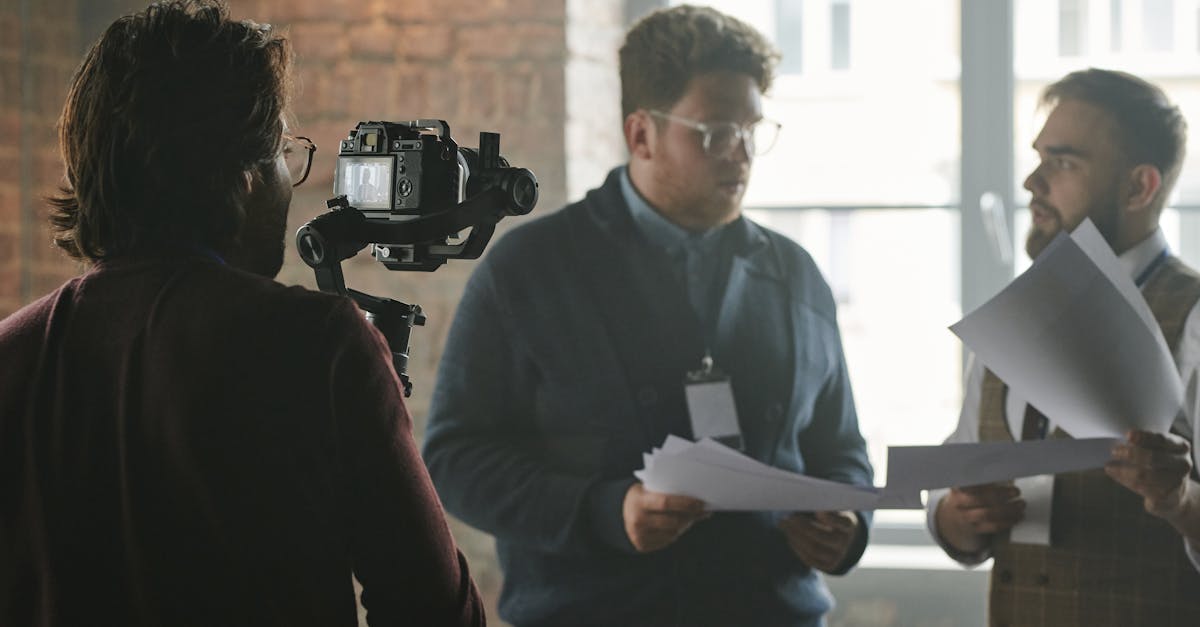
 Photo by fauxels on Pexels
1. Relevant Portfolio Experience
- Work similar to your project type and budget level (ask for examples at your budget, not just their best work)
- Quality of footage and editing consistency across projects
- Variety showing adaptability across environments (office, venue, outdoor)
Red flags: Portfolio only shows personal projects; very limited samples; outdated content (3+ years old); no examples from similar industries.
2. Technical Competence
Ask specifically:
- What camera system do you use and do you carry a backup body?
- How do you handle low-light conference environments?
- What audio equipment do you bring, do you have dual-channel recording?
- Is your kit PAT tested and can you provide a certificate?
3. Professional Standards and Insurance
Non-negotiable for London:
- Public liability insurance (£2m minimum; £5–£10m preferred for most venues)
- Equipment insurance covering their full kit replacement value
- PAT certification for mains-powered equipment
- IP assignment clause in their standard contract (copyright ownership transfers to client on final payment under CDPA 1988 terms, confirm this is explicitly in their contract)
4. Communication and Brief Understanding
A professional London videographer should respond to your brief with clarifying questions, not a generic quote. If they send a rate card without asking about your objectives, distribution plan, or deliverables, expect the same surface-level approach on the shoot day.
London-Specific Gotchas, Parking, Permits, Congestion, Transport
Parking. Most central London locations have no on-site parking for production vehicles. Production vehicles park in the nearest NCP (£40–£100/day in Westminster, City, Soho, Mayfair), or in a paid loading bay (15-minute limit, no exceptions). Crews factor £75–£150/day for parking on a typical central shoot.
Filming permits. Westminster (most filming over 30 minutes), City of London (corporate filming over 30 minutes), and Royal Parks (Hyde Park, Regent's Park, St James's Park, Kensington Gardens) all require pre-arranged permits. Borough Market requires a £150/day commercial filming permit. As of 2025, fees ranged from £150 (City of London) to £450/day (Royal Parks). Lead time for permits is 1–4 weeks; same-week applications may be refused. Most permit forms require a method statement, public liability proof (£10m minimum), and a risk assessment.
Congestion charge and ULEZ. The London Congestion Charge is £15/day inside the central zone (Mon–Fri 07:00–18:00, weekends 12:00–18:00). The ULEZ covers most of Greater London; non-compliant production vehicles pay £12.50/day.
TfL filming. Filming on London Underground stations or trains requires TfL Filming Office approval (3+ weeks lead time, £600+ minimum charge, mandatory transport-officer attendance). Most crews film exteriors rather than inside.
Building access. Most City of London office buildings require security pre-clearance for crew names, kit case sizes, and a mandatory goods-lift booking, typically arranged 1 week ahead with facilities. Without it, the shoot doesn't start on time.
Experienced London videographers price these in. Ask any prospective videographer to confirm in writing that their quote includes permits, parking, and congestion charge, this single question filters out 80% of unrealistic quotes.
When to Hire a Videographer vs Production Company
Choose a Solo Videographer When:
- Budget is under £3,000 for the full project
- Project is straightforward (interviews, simple event coverage, social clips)
- Flexibility and speed are priorities
- You need ongoing content creation at consistent volume
Choose a Production Company When:
- Project is complex (multiple locations, actors, effects, scripted content)
- Budget allows for full crew (£5,000+)
- High production value is essential for paid distribution or broadcast
- You need end-to-end creative development, not just filming
At Airframe Media, we offer both individual videography and full corporate video production in London, adapting our approach to each client's needs and budget.
Questions to Ask Before Booking
 Photo by Kyle Loftus on Pexels
About their experience:
- Can you show me examples of similar projects at a similar budget?
- What's your experience filming in London corporate environments?
- Have you worked with businesses in our sector before?
About the project:
- What's included in your day rate, and what will be charged separately?
- Does your quote include post-production, and how many edit days?
- What's your typical turnaround time for edited footage?
- How many revision rounds are included, and what's the cost for additional rounds?
About logistics and compliance:
- Do you carry current Public Liability Insurance, and can you provide the certificate?
- Is your equipment PAT tested?
- Does your contract include an IP assignment clause transferring copyright to us?
- What's your cancellation policy and what happens if you're unable to attend on the day?
- Are travel, parking, and congestion charge included in your quote?
Where to Find London Videographers
Online directories: Bark (request multiple quotes), ProductionHUB (industry professional database), Mandy.com (professional crew database)
Professional networks: LinkedIn (search "London videographer" or "corporate video London"); BECTU's crew directory; Guild of Television Camera Professionals
Referrals: Colleagues who've recently produced video; event organisers who work with production crews regularly; marketing agencies who brief external production
The most reliable source remains direct referral from a trusted professional who has seen the videographer's work and been through the production process with them.
Conclusion
Hiring the right London videographer is a procurement decision as much as a creative one. The 2026 market offers world-class operators at every tier, the risk is not finding someone skilled, it's failing to verify that they're legally compliant (PLI, PAT, IP assignment), operationally prepared for London (permits, congestion, building access), and quoting on a like-for-like basis (day rate plus post-production, not day rate alone).
Key takeaways:
- Match the supplier to your project type: a solo videographer for social and simple shoots, a small crew for most corporate content, and a full production company for advertising and high-end brand films. Check current day-rate benchmarks in our videographer cost guide.
- Always request three documents before booking: PLI certificate, PAT certificate, and a contract with IP assignment clause
- Remember the 3:1 post-production ratio, a 1-day shoot generates approximately 3 days of post-production cost
- For drone work in central London, budget 4 weeks lead time and £400–£700 in additional costs for authorisation and pilot premium
Ready to discuss your London video project? Every project is different: get in touch to discuss your specific requirements and receive a custom quote. We'll recommend the right crew tier for your needs and provide a transparent, itemised quote covering shoot, post-production, permits, and all ancillary costs.
Frequently asked questions
What is the average day rate for a videographer in London?
A current UK booked-data benchmark puts the average freelance videographer at £427 per day. Experienced London solo operators typically charge around £650 to £900 per day for labour, before specialist kit and post-production. These are market guidance rather than Airframe's current rates. Post-production, additional crew, permits and parking may be separate, so request an itemised project total before comparing quotes from different videographers.
What is the difference between hiring a freelancer and a video production company in London?
A freelance videographer is typically one or two people operating with their own personal kit, offering high flexibility, fast turnaround, and lower cost. They are best for social media content, straightforward interview shoots, event coverage, and internal communications. A video production company brings a full crew (director, director of photography, camera operators, sound recordist, gaffer, producer), extensive equipment, formal pre-production, and a structured post-production workflow, priced as an itemised project quote that depends on crew size. Production companies are better suited to scripted content, multi-location shoots, broadcast advertising, national campaigns, and anything requiring a director separate from the camera operator. The practical decision rule: if the brief is defined and simple, hire a skilled freelancer. If the brief requires creative development, multiple crew specialists, or broadcast-quality output for paid distribution, commission a production company.
How do I write a video production brief?
A strong video production brief covers six elements: (1) Objective, what specific business outcome should the video achieve? (be precise: 'generate 20 MQLs from the landing page' beats 'raise brand awareness'); (2) Audience, who will watch it, on which platform, in what context? (LinkedIn feed vs. boardroom presentation vs. homepage hero require different approaches); (3) Deliverables, exactly what cuts are required: master length, platform formats, aspect ratios, derivative clips; (4) Key messages, the two or three points the viewer must retain, in priority order; (5) Tone and references, links to videos that match the desired style, energy, and production level; (6) Constraints, budget range, shoot date, location, people available on camera, legal restrictions on content. A brief that answers all six elements enables a videographer to price accurately and brief the crew correctly. Without a clear brief, quotes are guesses and shoot days produce coverage that doesn't match the edit needed. For a full template, see our guide on how to [write a video production brief](/blog/how-to-write-video-production-brief-template/).
What should I check before signing a videography contract in the UK?
Four things are non-negotiable before signing a UK videography contract. First, intellectual property assignment: under the Copyright, Designs and Patents Act 1988, copyright in the footage and edited deliverables defaults to the creator, not the commissioner, unless a written agreement assigns it otherwise. Confirm the contract explicitly assigns all copyright and neighbouring rights to you (the client) upon final payment. Second, public liability insurance: confirm the videographer holds current PLI at a minimum of £2m indemnity, most London venues require £5–£10m. Request the certificate, not just a verbal confirmation. Third, revision rounds and additional costs: confirm exactly how many revision rounds are included, what each additional round costs, and what happens if the brief changes after filming. Fourth, deliverable specification and timeline: the contract should list every deliverable by name (e.g. '1 × 2-minute master cut, colour-graded, with lower-thirds, exported as H.264 1920×1080 and vertical 1080×1920'), with a confirmed delivery date and a clear process for what constitutes final sign-off.
How much does a one-day corporate shoot cost in London all-in?
A one-day corporate interview shoot in central London at the mid-tier (professional videographer, broadcast-quality output) costs approximately £2,800–£4,500 all-in. The cost breakdown: videographer day rate £700–£900, sound recordist £450–£600, additional lighting package £250–£400, post-production for a 2–3 minute master cut (applying the 3:1 industry-standard post-to-shoot ratio) £1,200–£1,800, music licensing £80–£200, parking and congestion charge £100–£150, permit fee if filming in a restricted area £150–£450. At the freelance tier (solo operator, no additional crew), the same one-day shoot with a polished master cut costs approximately £1,400–£2,200 all-in, covering the solo rate, basic post-production, music, and parking. The gap between a '£750 day rate' headline and the all-in project cost is consistently 2–3x, which is why itemised quotes are essential for accurate budget planning. See our full breakdown of [London video production costs](/blog/corporate-video-production-cost-london/) for a complete project cost model.
How far in advance should I book a London videographer?
For standard corporate shoots, book 3–4 weeks ahead to secure your preferred videographer at standard rates. Shoots booked less than 14 days out typically incur an 18–25% premium because freelancers and kit hire houses charge short-notice rates, and the best operators in London are rarely available on short notice. For complex productions involving multiple crew roles, drone work in restricted London airspace, or shoots requiring filming permits (Westminster, City of London, Royal Parks), allow 4–6 weeks minimum: permit applications alone take 1–4 weeks, and CAA Article 16 authorisations for central London drone operations require 2–4 weeks minimum lead time. Premium content shoots planned 6+ weeks ahead tend to come in 10–15% under market because you can shop competitive quotes rather than paying the available-crew premium. If your timeline is tight, be upfront about it when requesting quotes: some production companies keep standby slots for urgent work, though at a premium.
Do I need a permit to film a corporate video in London?
Yes, for most outdoor corporate filming in central London you need a permit. Westminster Council requires a filming permit for any shoot lasting more than 30 minutes on public land: fees start at £150 for a half-day. The City of London Corporation has similar requirements for commercial filming in the Square Mile, with fees from £150/day. The Royal Parks (Hyde Park, Regent's Park, St James's Park, Kensington Gardens) charge £150–£450/day depending on the park and crew size. Borough Market charges £150/day for commercial filming. Transport for London (TfL) requires separate approval for any filming on London Underground stations or trains, with a minimum charge of £600/day plus mandatory transport-officer attendance and a 3-week lead time. Most permit applications require a method statement, proof of public liability insurance (£5–£10m minimum), and a risk assessment. Indoor filming in offices, studios, or private venues does not require council permits but does require the property owner's written permission. Professional London videographers typically handle permit applications as part of pre-production: confirm this is included in your quote.
Can I hire a London videographer for a half-day shoot?
Most London videographers quote a full day rate (8–10 hours) as their minimum booking, even for shoots that only need 3–4 hours. The reason is practical: a half-day shoot still blocks the operator's full calendar day, and the setup, travel, kit prep, and wrap time typically add 2–3 hours around the shoot itself. Some freelancers offer a half-day rate at 60–70% of their full day rate for very short, simple shoots (under 3 hours, single location, minimal kit), typically for social media content, quick interview capture, or b-roll pickups. Half-day rates in London range from £250–£500 depending on the operator and kit requirements. The more reliable way to control cost for a small job is to batch multiple short shoots into a single full day: for example, filming two 2-hour testimonials at the same location on the same day, which uses the videographer's time efficiently and gives you two deliverables for one day rate plus post-production on each.
ABOUT THE AUTHOR
Founder & CEO
Liam founded Airframe Media in 2015 and leads creative direction across the studio. His work spans corporate, commercial, and event films for UK businesses including Levy, Taylor Wimpey, and ExCeL London, and he writes about professional video production in London.
TAGS
Related Services
Ready to Bring Your Vision to Life?
Let's discuss how our video production services can elevate your brand