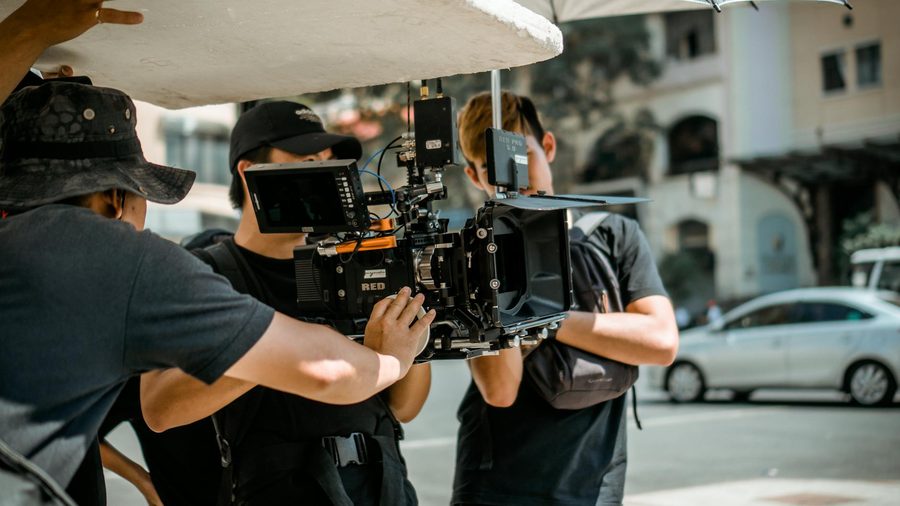
Video Pre-Production Checklist: 37 Steps
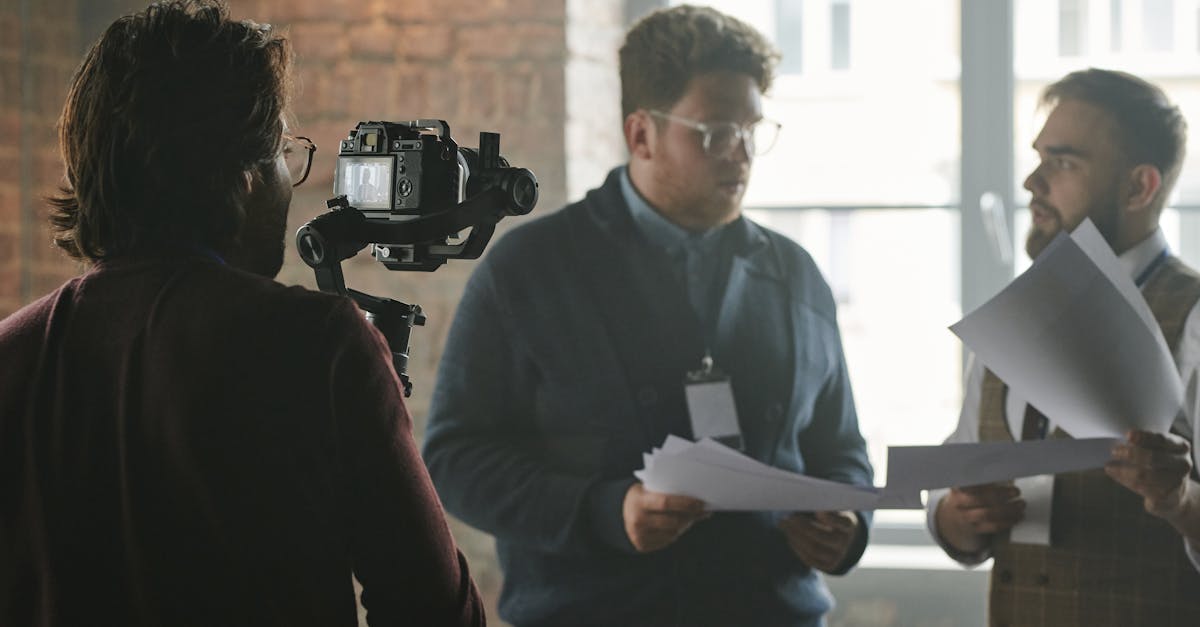 Photo by Henri Mathieu-Saint-Laurent on Pexels
A corporate video pre-production checklist is the structured planning framework that turns a creative brief into a shoot-ready production (covering script approval, location scouting, borough filming permits, talent confirmation, insurance certificates, equipment prep, and logistics) before a single frame is filmed. This 37-item checklist is drawn from 200+ corporate productions delivered across London since 2015.
Information Gain: what most pre-production checklists miss:
- London permit variance: Westminster Council filming permits need 5–10 working days minimum; Southwark and Lambeth often process in 3 working days. Applying 10 days ahead regardless of borough avoids last-minute venue-access delays.
- Insurance thresholds by venue type: Most London 5-star hotels require £5m public liability minimum (some specify £10m); corporate office blocks typically need £2–5m; public-realm filming permits require £5–10m. Insist your production company carries at least £5m as standard.
- 2026 CAA update for drone-inclusive shoots: The CAA now requires drone pilots to carry physical evidence of operator authorisation on location: a digital copy on a phone alone is not sufficient for a spot check. If your production plan involves aerial footage, confirm this documentation with your crew during pre-production.
This guide walks through each phase with practical London-specific detail: permit lead times by borough, insurance certificate requirements for different venue types, and a call-sheet walkthrough using a real Airframe production as a worked example.
What is video pre-production?
Video pre-production is the planning stage between a signed-off creative brief and the first shoot day. It turns the brief into a script, a shot plan, a schedule and confirmed locations, crew, talent, permits and insurance, so the filming day runs to plan and the edit starts from footage that matches the brief.
The documents pre-production produces:
- Creative brief
- Script
- Storyboard or shot list
- Production schedule
- Call sheet
- Location filming permits
- Insurance certificates
- Talent release forms
Why Pre-Production Makes or Breaks a Corporate Video
The maths is straightforward. Every hour spent in pre-production saves three on set and in the edit suite. Here's why:
- Budget control: Most cost overruns stem from poor planning, not production issues. Unclear briefs lead to reshoots. Missing permits cause delays. Unconfirmed locations add travel and rescheduling costs.
- Creative quality: When logistics are resolved before filming day, your crew focuses on capturing great footage rather than solving problems under time pressure.
- Stakeholder alignment: Pre-production forces decisions upfront, fewer surprises in the edit, fewer revision rounds.
- Timeline certainty: A thorough pre-production plan gives everyone realistic milestones.
Phase 1: The Creative Brief
Every successful production starts with a solid brief. This document aligns your team, your stakeholders, and your production company around a shared vision.
Your brief should answer:
- Objective: What should viewers do after watching? (Buy, enquire, sign up, understand a process?)
- Audience: Who exactly are you speaking to? Role, industry, and pain points.
- Key messages: What are the 2–3 things viewers must take away?
- Tone and style: Corporate and formal? Warm and personal? Energetic and fast-paced?
- Distribution: Where will the video live? Website, social media, presentations, broadcast?
- Budget range: Even a rough range helps scope the production appropriately.
- Timeline: When do you need the final video? Work backwards from delivery.
If you haven't written a brief before, our complete video production brief guide walks through each section with a downloadable template.
Phase 2: Scripting and Storyboarding
Script Formats
Not every corporate video needs a word-for-word script. Choose the right format:
- Full script: Every word written. Best for voice-overs, explainer videos, and presenters on autocue.
- Outline script: Key points and interview questions. Best for testimonials, documentary-style, and case studies.
- Shot list: Scene-by-scene description of captures needed. Essential for all productions regardless of format.
Storyboarding
For complex productions, storyboards translate the script into visual frames. They don't need to be artistic, stick figures and rough sketches work. What matters is that everyone understands:
- Camera angle and framing for each shot
- Camera movement (pans, dolly moves, drone shots)
- On-screen text or graphic overlays
- Transitions between scenes
Review Checkpoint
Get script and storyboard sign-off from all decision-makers before proceeding. Changes at script stage cost nothing. Changes on set cost everything, and mid-edit rewrites cost more than that.
Phase 3: Location Scouting and London Permits
The Recce
A location recce (reconnaissance visit) is non-negotiable for professional production. During the visit, assess:
- Lighting: Natural light direction at the planned shoot time, window positions, and artificial lighting needs
- Sound: Background noise levels, HVAC systems, traffic, construction activity
- Power: Socket locations and capacity for lighting rigs and equipment
- Space: Room for cameras, lights, and crew movement; usable backgrounds
- Access: Loading bay for equipment, lift access, parking for production vehicles
London Permit Lead Times by Borough
Filming in London adds specific permit planning requirements. Lead times vary significantly by borough and filming location. Based on our experience with 200+ London productions:
City of London Film Office The City of London Film Office processes permits within 10 working days for standard commercial filming on public land. Complex shoots (large crews, major streets, heritage locations) may require additional time. Apply via the City of London Film Office website. Note: roads around the Stock Exchange and Bank junction require liaison with Transport for London (TfL) as well as City of London.
Westminster City Council Westminster Film Office typically processes filming permits in 7 working days. The busiest central London borough, Westminster covers Parliament Square, Trafalgar Square, Oxford Street, and most of the South Bank. ULEZ and congestion charge zone compliance must be confirmed for equipment vehicle access.
Tower Hamlets Tower Hamlets (covering Canary Wharf, Brick Lane, Bethnal Green, Wapping) typically processes permits in 5 working days. Canary Wharf estate filming is handled separately by the Canary Wharf Group estate management team, lead times vary and direct liaison is required.
Additional Boroughs: Most inner London boroughs (Southwark, Lambeth, Islington, Hackney) operate 5–7 working day permit windows. Always apply at least 10 working days ahead to allow for follow-up queries. For a comprehensive planning overview covering permit applications, see our guide to event filming in London which covers public-space permit logistics in detail.
Sample Call Sheet: The Tower Bridge Corporate (Anonymised)
To illustrate how pre-production documentation works in practice, here's how a recent Airframe production was structured. The client was a financial services firm filming an executive thought-leadership piece in and around the Tower Bridge area. Details are anonymised.
Project: 2-minute corporate thought-leadership film (client anonymised) Location: London Bridge area office + Tower Bridge exterior Crew: Director/Producer (our director Liam Mead), DOP/Camera Op, Sound Recordist, Production Assistant Shoot date: Tuesday, 9am–6pm
Call Sheet (key fields):
- General call: 7:30am, crew load-in, parking on Tooley Street (pre-booked)
- Client arrival: 9:00am, on-camera talent briefed on wardrobe and autocue
- Interior interview setup: 9:00–10:30am, 2-point interview lighting, lapel + boom audio
- First setup filming: 10:30am–12:30pm, 3 interview takes, 2 angles
- Lunch: 12:30–13:15pm
- External filming block: 13:30–16:00pm, Tower Bridge permit window 13:00–17:00 (Southwark permit, applied 8 working days prior)
- Coverage/cutaways: 16:00–17:30pm, walking shots, building exteriors, B-roll
- Wrap + data backup: 17:30–18:00pm, two copies of all footage to separate drives before leaving location
Notes from that shoot:
- ULEZ charges confirmed for equipment van (diesel, pre-2016 Euro 5 engine): £12.50 per day
- Congestion charge: £15 per day (shooting days only)
- Tower Bridge exterior: no permit required for a 4-person crew with handheld cameras, only required for larger setups with tripods in public footway
Phase 4: Insurance Certificate Requirements
Insurance requirements vary significantly by London venue type. Getting this wrong has caused productions to be stopped at the venue door, a situation we have seen happen to other crews. Here is what to have ready:
5-Star Hotels (e.g., Claridges, The Shard, Corinthia)
Most London 5-star hotels that host filming require:
- £5 million public liability minimum (some require £10 million, confirm with venue)
- Equipment insurance covering the full replacement value of all gear on site
- Employer's Liability insurance (required for any crew member not a sole trader)
- Certificate of Insurance naming the hotel as an additional interest
- Often required: RAMS (Risk Assessment and Method Statement) submitted 48–72 hours in advance
Corporate Office Blocks
Standard requirements for filming in corporate office environments:
- £2–5 million public liability (typically £5 million for City of London premises)
- Certificate of Insurance from the production company's insurer, not a broker note
- Building owner's filming permission form (separate from the individual company's permission)
- Data protection consideration: if other employees may appear in background footage, a filming notice to building residents may be required
Public Realm (Streets, Parks, Public Squares)
For public-realm filming with local authority permits:
- £5–10 million public liability, most London boroughs require £5 million minimum, Tower Hamlets and the City of London require £10 million for street shoots
- Certificate must be current (not expired at the time of filming) and must match the name on the permit application
- Some boroughs require the insurer to be FCA-regulated and UK-domiciled
Practical note: Your production company should carry public liability insurance as standard. If they don't carry at least £5 million, ask why. Airframe Media carries £10 million public liability for all productions.
For more detail on our production approach and team qualifications, explore our full service range.
Phase 5: Casting and Talent
Who Appears On Camera?
Decide early who features in your video:
- Company employees: Authentic but may need coaching. Allow extra time on shoot day for nerves and autocue rehearsal.
- Professional presenters: Polished delivery, can read from autocue. Budget £500–£2,000+ per day.
- Real customers: Excellent for testimonials. Coordinate schedules well in advance.
- Actors: For scripted scenarios. Source through casting agencies (UK Casting or equivalent).
Talent Preparation
Whoever is on camera, prepare them:
- Send scripts or talking points at least one week in advance
- Brief them on wardrobe: avoid thin stripes, small patterns, all-white or all-black
- Explain the process so they know what to expect on the day
- Schedule a brief rehearsal or pre-interview call for nervous on-camera performers
Phase 6: Technical and Crew Planning
The right equipment and crew depend on production scale. A typical corporate video in London requires four core roles, to see a behind-the-scenes walkthrough of a corporate shoot, our production-day guide shows how these roles interact in practice.
Core Crew
- Director/Producer: Manages creative vision, timeline, and stakeholder communication
- Camera operator: Operates the primary camera, frames and executes shots
- Sound recordist: Captures clean audio (critical for interview and dialogue work)
- Lighting technician: Sets up and manages lighting rigs and practicals
Equipment Checklist
- Cinema cameras (typically 2 for corporate work, main and cutaway)
- Lens kit (wide, standard, telephoto)
- Professional lighting kit (LED panels, softboxes, practicals)
- Wireless lapel microphones + boom mic
- Tripods, sliders, or gimbal stabilisers
- Monitors for director and client review
- Batteries, memory cards (redundant copies), and drives for on-set backup
Working with a corporate video production company in London means you don't need to source any of this. It's included in the production package with no equipment rental markup.
The 37-Item Pre-Production Checklist
Use this in the two weeks before your shoot. This checklist is adapted from the standard Airframe pre-production template used across 200+ London productions.
 Photo by Tima Miroshnichenko on Pexels
Creative (1–9)
- Creative brief approved by all decision-makers
- Script/talking points finalised and approved
- Shot list complete with all scenes and setups covered
- Storyboard or visual reference approved
- Brand guidelines shared with production team
- Graphics and on-screen text reviewed for brand compliance
- Any logo or product clearances confirmed
- Competitor restrictions checked (no competitor logos in B-roll)
- Music brief confirmed (genre, mood, licensing type)
Locations (10–17) 10. [ ] Location confirmed and booking confirmed in writing 11. [ ] Filming permit applied for (borough-specific lead times above) 12. [ ] Insurance certificate obtained and shared with venue 13. [ ] RAMS submitted to venue if required (5-star hotels, corporate buildings) 14. [ ] Parking and load-in time confirmed with venue 15. [ ] Power supply tested at location (socket count, trip switch locations) 16. [ ] Noise assessment done (HVAC schedule, street noise patterns) 17. [ ] Emergency exit routes confirmed for crew safety
Talent (18–24) 18. [ ] All on-camera participants confirmed and call times sent 19. [ ] Wardrobe guidance sent with specific do's and don'ts 20. [ ] Autocue/teleprompter booked if required 21. [ ] Consent/release forms prepared and sent in advance 22. [ ] Hair and makeup arranged if needed 23. [ ] Rehearsal or pre-interview call scheduled 24. [ ] GDPR/ICO consent form prepared for filmed employee data
Technical (25–30) 25. [ ] Equipment list finalised and all kit tested 26. [ ] All batteries charged, memory cards formatted and checked 27. [ ] Backup equipment confirmed (second camera body, spare audio kit) 28. [ ] Data storage plan confirmed (on-set backup protocol) 29. [ ] Technical spec confirmed with edit suite (codec, frame rate, delivery format) 30. [ ] LMS/SCORM spec confirmed if training video output
Administrative (31–37) 31. [ ] Insurance certificates ready (public liability, equipment, employers' liability) 32. [ ] Risk assessment completed for all locations 33. [ ] Emergency contacts list for all crew and talent 34. [ ] ULEZ and congestion charge confirmed for production vehicles 35. [ ] Weather forecast checked (outdoor shoots, contingency plan in place) 36. [ ] Post-production schedule agreed with editor 37. [ ] Final call sheet distributed to all crew and talent
Common Pre-Production Mistakes to Avoid
Skipping the recce. Turning up on shoot day to discover the room has fluorescent strip lighting, a noisy air-conditioning unit, and no power sockets near the interview position is avoidable with a single 30-minute site visit.
Vague briefs. "We want something like Apple" is not a brief. The more specific you can be about objectives, audience, and messages, the better the result, and the faster the edit.
Not allowing enough time. Rushing pre-production almost always backfires. You spend more time and money fixing problems than you saved by cutting corners.
Ignoring audio. Beautiful footage with poor audio is unwatchable. Sound planning, location noise assessment, microphone selection, and quiet recording windows, needs to be in the pre-production plan.
Too many stakeholders in the edit. Agree on who has final sign-off before production starts. Six people providing conflicting feedback turns a two-week edit into two months. Document it in your brief.
When to Bring in a Professional Production Company
You can handle simple pre-production internally, but consider commissioning professionals when:
- You need broadcast or cinema-quality output
- The project involves multiple London locations or complex logistics
- You don't have in-house production experience
- The project is high-stakes (investor presentations, product launches, recruitment campaigns)
- You need drone filming, advanced lighting, or specialist equipment
A good production company brings production management expertise that makes the entire process smoother and the final product stronger.
For internal-facing content like employee communications videos, stakeholder sign-off typically adds an additional week to the pre-production timeline: HR, legal, and department heads all need a review window before filming begins.
Ready to start planning? Get in touch with our London team for a free consultation.
Need help with your video production brief? Our free video production brief template covers every section. For wider production costs and service options, see our full service range.
Frequently asked questions
What should a corporate video pre-production checklist include?
A complete corporate video pre-production checklist covers: creative brief approval, script and storyboard sign-off, location scouting and recce, filming permit applications, insurance certificate preparation, talent confirmation and consent forms, equipment and crew planning, and a call sheet for the shoot day. For London shoots, borough-specific permit lead times are also part of the checklist, City of London requires 10 working days, Westminster 7 working days, Tower Hamlets 5 working days. Our 37-item checklist above covers every phase from brief to shoot morning.
How far in advance do you need to apply for filming permits in London?
Filming permit lead times in London vary by borough. City of London Film Office: 10 working days minimum. Westminster Film Office: 7 working days minimum. Tower Hamlets: 5 working days minimum. Most other inner London boroughs (Southwark, Lambeth, Islington, Hackney) operate on 5–7 working day windows. Apply at least 10 working days ahead regardless of borough to allow for follow-up queries. Canary Wharf estate filming is handled separately by Canary Wharf Group estate management, with variable lead times requiring direct liaison.
What insurance do you need to film in a London hotel or corporate building?
For 5-star London hotels, typically £5–10 million public liability (confirm with each venue), equipment insurance covering full replacement value, employers' liability insurance, and a Certificate of Insurance naming the hotel as an additional interest. Many 5-star venues also require a Risk Assessment and Method Statement (RAMS) submitted 48–72 hours in advance. For standard corporate office buildings, £5 million public liability is usual, plus the building owner's filming permission form alongside the individual company's permission. For public realm filming with borough permits, £5–10 million is standard, most City of London and Tower Hamlets permits require £10 million.
How long does corporate video pre-production take?
Pre-production for a standard corporate video typically takes 1–4 weeks depending on project complexity. A simple single-location interview piece might need 3–5 days of planning. A multi-location brand film with casting, location permits, and multiple stakeholders can require 3–4 weeks. The most time-sensitive element is usually the filming permit for public locations, City of London requires 10 working days minimum. Build pre-production time into your overall project timeline from the first brief conversation: a 4-week total project timeline is ambitious; 8–12 weeks is realistic for polished corporate work.
What is a call sheet and why is it important?
A call sheet is a structured document distributed to all crew and talent before a shoot, detailing arrival times, locations, scene order, contact information, and logistics for the day. It is the single most important operational document for a smooth shoot day. A well-structured call sheet includes: general crew call time, individual talent call times (staggered to avoid waiting), location address with access instructions, parking details, the day's schedule by hour, emergency contacts for each crew member, and any special instructions (permit reference numbers, venue access protocols, ULEZ vehicle information). Without a call sheet, shoot days run over time and budget.
How do you prepare on-camera talent for a corporate video shoot?
Preparation is the single biggest factor in interview-style corporate video quality. Start with a script or talking-points document sent at least one week before the shoot, not the day before. Brief talent on wardrobe specifics: avoid thin stripes, small patterns, all-white and all-black outfits (contrast issues in camera). Explain the process in plain terms, what setup will look like, how many takes you'll do, how they can ask to pause or restart. Schedule a 15-minute rehearsal call or pre-interview conversation to build confidence. On the day, allow extra setup time before filming starts so talent can settle. Professional presenters (£500–£2,000/day) are experienced with autocue and require minimal coaching; employees and executives typically benefit from 20–30 minutes of warmup before the camera rolls.
ABOUT THE AUTHOR
Founder & CEO
Liam founded Airframe Media in 2015 and leads creative direction across the studio. His work spans corporate, commercial, and event films for UK businesses including Levy, Taylor Wimpey, and ExCeL London, and he writes about professional video production in London.
TAGS
Related Services
Ready to Bring Your Vision to Life?
Let's discuss how our video production services can elevate your brand