Training Video Cost London 2026: Rate Card
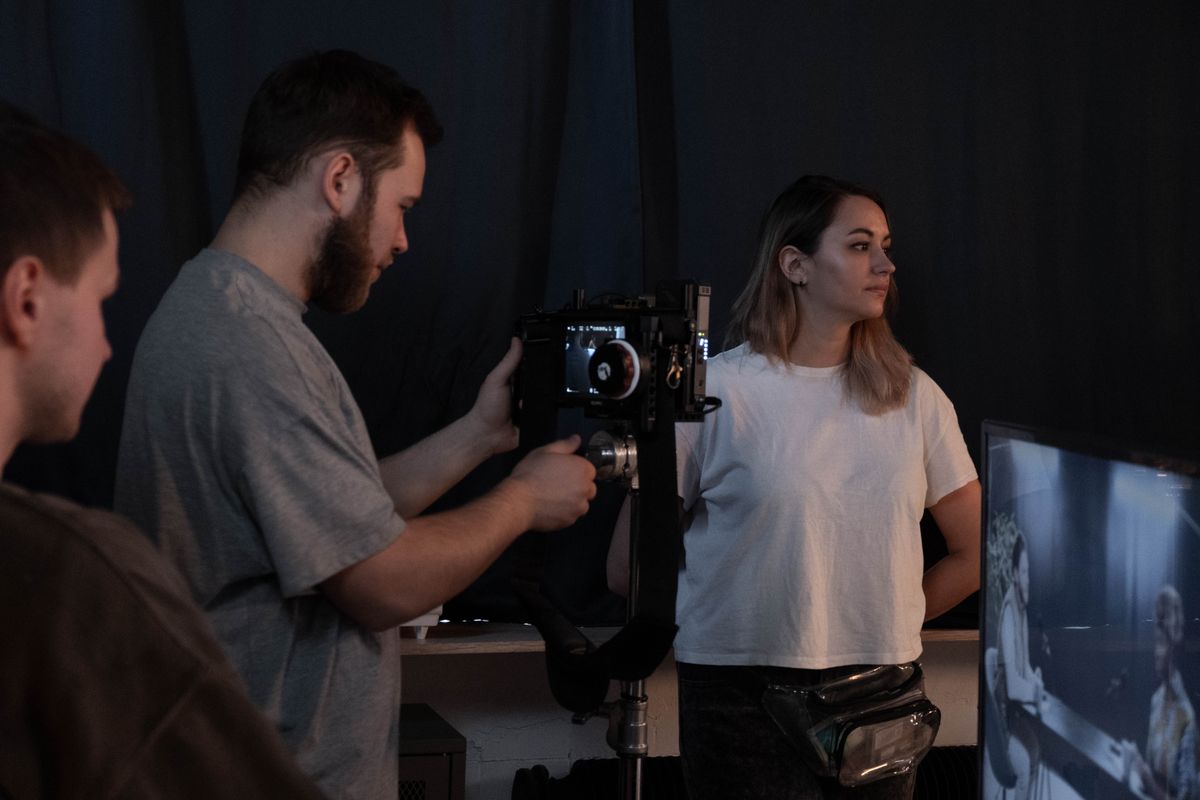
 Photo by Henri Mathieu-Saint-Laurent on Pexels
Training video production in London typically costs £3,000–£15,000 depending on complexity, length, and format. A simple talking-head or screen-capture module runs £1,500–£3,500; a multi-presenter studio production with B-roll and motion graphics reaches £8,000–£20,000+. The final price depends on four key variables: presenter count, animation requirements, location, and post-production complexity. This guide breaks down real per-module costs, what drives pricing, and how to budget a training series that balances quality with return on investment.
Information Gain — what most training video pricing guides leave out:
- LMS format delivery costs: SCORM packaging for LMS platforms (Moodle, Cornerstone, Docebo) adds £300–£800 per module. Multi-language captioning and subtitling adds £150–£400 per language. If you need xAPI or cmi5 compliance for detailed learner analytics, budget an additional £200–£500 per module in post-production.
- Airframe's observed pricing split across 50+ training productions: Pre-production (scripting, instructional design, storyboarding) typically accounts for 40% of the total budget; filming accounts for 30%; post-production (editing, graphics, LMS packaging) accounts for the remaining 30%. Many clients underestimate pre-production, but it is the phase that most determines whether the final video achieves its learning objectives.
- Per-expert day rate as a hidden cost driver: Each additional subject matter expert featured on camera adds £650–£1,200 to the production day in London. A compliance video with a single presenter costs less than a roundtable discussion with four department heads — not because of extra camera time, but because coordinating multiple senior diaries, prepping each presenter, and managing varied delivery styles on set multiplies complexity.
How Much Does Training Video Production Cost in London?
A professional corporate training video in London typically costs £3,000–£15,000+ depending on scope, length, and production values. Here is a quick-reference breakdown by format:
| Format | Typical Cost | Best For |
|---|---|---|
| Simple talking-head or screencast | £1,500–£3,500 | Single-module onboarding, policy walkthroughs |
| Mixed format (interview + B-roll + basic graphics) | £3,500–£8,000 | Product training, process demonstrations |
| Studio production (multi-camera + presenter + motion graphics) | £8,000–£15,000 | Branded compliance series, customer-facing training |
| Complex animated or interactive module | £12,000–£25,000+ | Technical product training, interactive scenarios |
These figures reflect a complete production from brief to final delivery, not just a filming day. The range is wide because training videos vary enormously in scope — from a 5-minute onboarding module to a 10-part compliance series with motion graphics, voiceover, and LMS-ready deliverables.
Per-minute pricing is a useful benchmark: professional London production companies typically deliver at £1,500–£3,000 per finished minute. A 5-minute training video from an established London company will cost £7,500–£15,000 all-in. Per-minute costs decrease with multi-module series — a 12-module course costs less per module than a single one-off video because pre-production, crew setup, and post-production templates are shared across the series.
What Affects Training Video Production Costs?
1. Number of Modules and Total Runtime
Module count is the single largest cost driver. Each module requires its own scripting, filming setup, and edit pass. However, multi-module series benefit from significant economies of scale: the second module typically costs 30–40% less than the first because the pre-production framework, crew configuration, and post-production template are already established.
2. Presenter Count and Talent Type
A single in-house presenter costs nothing beyond their time. A professional voiceover artist adds £300–£800 per module. An on-camera professional presenter ranges from £500–£1,500 per day. Each additional presenter — whether in-house or professional — adds complexity to scheduling, briefing, and on-set management. A roundtable format with four contributors requires more camera angles, more audio channels, and more edit time than a single-presenter piece.
3. Location and Set Requirements
Filming at your offices avoids studio hire costs but often requires additional lighting and sound treatment to achieve professional results. A dedicated London studio gives full environmental control but adds £500–£2,000 per day. Multi-location shoots (office + external B-roll + drone aerials) multiply travel, setup, and permit costs.
4. Animation and Motion Graphics
Simple branded lower-thirds and title cards are typically included in the production quote. Custom 2D motion graphics explaining a process or data point add £300–£800 per animated sequence. A fully animated training module — where the entire visual narrative is built in After Effects — starts from £5,000. 3D animation for technical or product training starts higher still.
5. Delivery Format and LMS Integration
Standard MP4 delivery is included in every production. SCORM 1.2 or 2004 packaging for LMS compatibility adds £300–£800 per module. xAPI (Tin Can) for detailed learner analytics adds £200–£500 per module. Multi-language versions — including translated captions, subtitles, and voiceover — multiply post-production costs by 1.5–3× per language depending on whether you need captions only or full re-voicing.
6. Revision Rounds
Most productions include two revision rounds in the base quote. Additional rounds at £200–£500 each can add up quickly. The single most effective cost-control measure is a detailed, approved brief before production begins — it eliminates the mid-edit rewrites that drive budgets over.
Types of Training Videos and Their Typical Costs
| Training Type | Typical Cost | Production Approach |
|---|---|---|
| Onboarding module | £2,000–£5,000 | Single presenter, office location, simple graphics |
| Software/product walkthrough | £3,000–£8,000 | Screen capture + presenter overlay, UI animations |
| Compliance training | £5,000–£15,000 | Multi-presenter, studio, branded graphics, LMS-ready |
| Health & safety | £4,000–£10,000 | Location filming, practical demonstrations, voiceover |
| Sales enablement | £6,000–£15,000 | Case-study interviews, B-roll, data visualisation |
| Technical/product deep-dive | £8,000–£20,000+ | Specialist presenter, 3D animation, interactive elements |
| Leadership/executive message | £3,000–£8,000 | Single presenter, premium location, teleprompter |
LMS and Technical Delivery Costs
Once the video is edited, delivering it into your learning management system introduces additional considerations. SCORM packaging ensures the module reports completion status, quiz scores, and time spent back to your LMS. Most corporate LMS platforms (Moodle, Cornerstone, Docebo, SAP Litmos) accept SCORM 1.2 or 2004 packages. If your organisation uses xAPI for more granular analytics — tracking which sections learners re-watch, where they drop off, or how they interact with embedded scenarios — budget additional development time. Captioning for accessibility compliance (WCAG 2.1 AA) is now standard for corporate training and is typically included in the post-production quote, but confirm this explicitly. Multi-language subtitling and dubbing are separate line items.
Training Video Production Process Timeline
A typical corporate training video takes 4–8 weeks from brief to delivery:
| Phase | Duration | What Happens |
|---|---|---|
| Pre-production | 1–2 weeks | Briefing, scripting, instructional design, storyboarding, presenter prep, location scouting |
| Filming | 1–3 days | Setup, filming per module, audio capture, B-roll |
| Post-production | 2–4 weeks | Editing, colour grading, sound mixing, motion graphics, LMS packaging, review rounds |
| Delivery | 1–2 days | Final quality check, LMS upload, file handover |
Multi-module series extend the timeline proportionally, though overlapping phases (editing module 1 while filming module 3) can compress the overall schedule.
For a full breakdown of training video formats and best practices, see our complete guide to training video production.
How to Brief a Training Video Production Company
The quality of your brief directly determines the accuracy of your quote and the quality of the final video. Include:
- Learning objectives: What should learners know or do after watching?
- Target audience: Role, department, existing knowledge level
- Module count and runtime: How many videos, and how long should each be?
- Delivery platform: LMS name and version, SCORM or xAPI requirements
- Presenter preference: In-house talent, professional presenter, or voiceover-only
- Visual style references: Examples of training videos you like (and why)
- Timeline: When do you need the first draft, and when is the final deadline?
- Budget range: Even a rough range helps scope the production appropriately
A detailed brief allows production companies to quote accurately rather than padding for unknowns. For a downloadable template covering every section a video production brief needs, see our free template.
The ROI Case: Why Training Video Pays for Itself
The budget for a training video looks significant until you compare it to the alternative. A live training session with a facilitator, travel, printed materials, and lost productivity for 50 employees easily costs more than a single production — and can only be delivered once. A well-produced training video can be used for 2–5 years, amortising the production cost across thousands of views.
An IBM study found employees learn 5× more material with video-based training than classroom instruction. For onboarding alone, consistent video-based training reduces time-to-productivity by 40–60%, directly reducing cost-per-hire. When you factor in the consistency benefit — every employee receives exactly the same training, every time, without facilitator variability — the ROI case strengthens further.
For a broader view of corporate video production pricing in London, our cost guide covers the full range of corporate formats.
How to Reduce Training Video Costs Without Cutting Quality
Batch your shooting days. If you need four training modules, shoot them all in one or two days rather than spreading across multiple sessions. Setup costs are fixed — maximising what you capture per day drives cost efficiency.
Arrive with a finished script. Every hour spent on set discussing script changes costs £150–£300 in crew time. A finalised, approved script before filming day is the single biggest lever you have on budget.
Use in-house presenters where appropriate. Your own subject matter experts bring authenticity that a hired presenter cannot replicate. Budget the extra rehearsal time — it is cheaper than hiring professional talent — and the result often connects better with learners because the authority is real.
Repurpose footage across modules. Establish shots, location B-roll, and generic office footage can be reused across multiple training videos if planned in advance. Inform your production company during pre-production so they capture with reuse in mind.
Choose the right production partner for the format. A specialist corporate video production company familiar with training content works faster than a generalist — they understand learning structure, know how to direct non-actors, and anticipate LMS delivery requirements. This efficiency translates directly to cost.
Comparing In-House vs Agency vs Freelance for Training Video
This is one of the most common decisions facing L&D teams. Each approach has distinct trade-offs — for a detailed comparison of how corporate video formats compare across production models, our format comparison covers cost, quality, and consistency factors. In brief: a freelancer may deliver a single module at a lower day rate but cannot scale to a series with consistent quality across episodes; an in-house team gives you control but ties up headcount and equipment investment; a specialist production company brings the crew, equipment, and post-production workflow as a single package, which for multi-module series is typically the most cost-effective option per finished minute.
FAQ
Q: How much does a training video cost in London? A: Training video production in London typically costs £2,000–£8,000 for a professional single-module production. A simple single-module screencast-style video starts around £1,500–£3,000, while a multi-module series with a professional presenter, multi-camera setup, and LMS-ready deliverables runs £5,000–£15,000. Per-minute costs decrease significantly with multi-module series — a 12-module course costs less per module than a single one-off video because pre-production frameworks, crew configurations, and post-production templates are shared. The most significant variables affecting cost are presenter count, animation complexity, module runtime, and LMS delivery requirements (SCORM, xAPI, multi-language).
Q: What factors most affect training video production costs? A: The key cost drivers include: number of modules and total runtime (the single largest variable), presenter count (each additional subject matter expert adds £650–£1,200 in London), animation and motion graphics complexity, filming location (office vs studio vs multi-location), delivery format requirements (MP4 vs SCORM vs xAPI with analytics), and the number of revision rounds. Pre-production quality — particularly scripting and instructional design — is the phase that most determines whether the final video achieves its learning objectives. Under-investing in pre-production typically increases total cost through longer edit times and additional revision rounds.
Q: How long does it take to produce a training video series? A: A typical single training module takes 4–6 weeks from brief to final delivery: 1–2 weeks for pre-production (scripting, instructional design, presenter prep), 1–2 days for filming, and 2–4 weeks for post-production (editing, graphics, sound mixing, LMS packaging, review rounds). A 4–6 module series typically takes 6–10 weeks, though overlapping phases — editing module 1 while filming module 3 — can compress the overall schedule. Multi-language versions add 1–2 weeks per language. The most common timeline risk is stakeholder review: agree on who has final sign-off before production starts and document it in the brief.
Q: What is included in a training video production quote? A: A professional training video quote from a London production company typically includes: instructional design consultation, scripting support, professional filming (crew, camera, lighting, audio, teleprompter if needed), post-production (editing, colour correction, sound mixing, basic motion graphics and branded lower-thirds), and standard MP4 delivery. Optional additions that are quoted separately include: professional voiceover or presenter, complex animation sequences, SCORM or xAPI packaging for LMS integration, multi-language subtitling or dubbing, interactive quiz elements, and additional revision rounds beyond the standard two included.
Q: Can training videos be updated or produced as modular content? A: Yes. Modular production is the standard approach for corporate training series — each module is filmed and edited as a standalone unit, making future updates straightforward and cost-effective. When a single module needs updating (for example, a software UI change, a compliance regulation update, or a rebrand), only that specific module needs re-filming or re-editing, keeping long-term maintenance costs low. We recommend this modular approach for any series expected to need content updates within 18–24 months. If you anticipate frequent updates, discuss a template-based post-production workflow with your production company during pre-production — it reduces the per-update edit cost significantly.
Q: What is the minimum budget for a professional training video in London? A: For a production that meets professional standards — with proper audio recording, colour-graded footage, and branded graphics — budget a minimum of £3,000–£4,000 for a short-form training video (under 5 minutes, single presenter, office location). Below this threshold, you are typically looking at a self-shot screencast or a single-camera operator without the post-production polish that keeps learners engaged. The jump from £3,000 to £8,000 is the most meaningful in terms of perceived quality: it buys a dedicated sound recordist (the single biggest differentiator in training video), professional lighting, motion graphics that reinforce learning points, and an edit pass that tightens pace and removes dead air.
Ready to discuss your training video requirements? Contact Airframe Media for a tailored quote based on your specific learning objectives, module count, and budget.
ABOUT THE AUTHOR
Video Production Specialists
Airframe Media is a London-based video production company operating since 2015. Our team has produced more than 500 corporate, commercial, and event films for UK businesses including Levy, Taylor Wimpey, and ExCeL London.
TAGS
Related Services
Ready to Bring Your Vision to Life?
Let's discuss how our video production services can elevate your brand