What Is B-Roll Footage? A-Roll vs B-Roll Examples
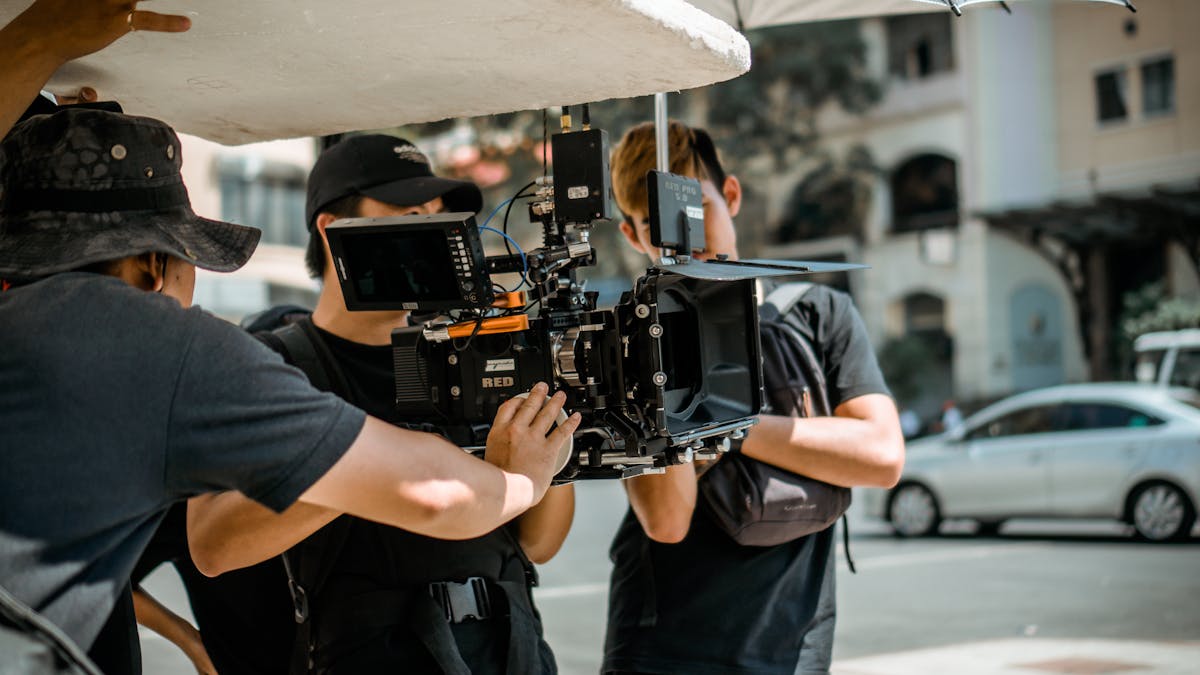
 Photo by George Milton on Pexels
B-roll footage is the supplementary video layered over your main interview or presenter shots: cutaways, location visuals, close-up details and establishing shots that keep viewers engaged while the primary audio carries the story. Most corporate videos are 60–80% b-roll by screen time, and it is usually filmed on the same shoot day.
Information Gain: Three Things Definition Guides Won't Tell You
Most "what is b-roll" articles stop at the dictionary definition. The three points below come from how b-roll actually gets planned, priced, and licensed on working London shoots.
- Capture b-roll on the main shoot whenever the schedule allows. A dedicated pickup is normally charged as another half-day or full filming day. Request Airframe's current rate card for the latest figures, and use our London videographer day-rate guide to compare working hours and kit inclusions across suppliers. A useful shot list is what makes same-day coverage possible.
- Aerial b-roll is a licensing question, not just a creative one. Any commercial drone b-roll in the UK requires a CAA-authorised operator, holding an A2 Certificate of Competency or an Operational Authorisation depending on the scenario, per the Civil Aviation Authority rules current in 2026. Our UK drone regulations guide covers what commissioning businesses need to check. Definition-level competitor posts skip the legal angle entirely.
- Editors work to a 3:1 rule. Professional editors want at least 3 usable seconds of b-roll for every finished-cut second they will cover. It is what makes jump-cut-free interview edits possible: every time the speaker's sentence is trimmed, b-roll hides the join. At Airframe Media we brief every shooter to that ratio as standard production practice, because running out of coverage in the edit is the single most common reason corporate videos feel choppy.
What B-Roll Actually Is (A-Roll vs B-Roll)
The terms come from the film era, when editors physically cut between two reels of film: the A-roll carrying the primary footage and the B-roll carrying everything else. Digital editing killed the reels but kept the names.
A-roll is your primary footage, the shots that carry the story's audio and narrative spine. In corporate work that means the interview, the presenter piece-to-camera, or the keynote speech. If you muted everything else, the a-roll alone would still make sense.
B-roll is everything layered over and around it: the office exterior, hands on a keyboard, the production line running, the team meeting seen through glass, the product close-up. B-roll rarely carries its own audio beyond ambient sound. Its job is visual: to illustrate what the speaker is describing, establish where the story takes place, and give the editor freedom to compress time.
A useful test on any shoot: if the camera operator asks "do you need this on mic?", the answer tells you which roll you are filming. Speech for the edit is a-roll. Atmosphere, action, and detail are b-roll.
Why B-Roll Matters
Two reasons, one for your audience and one for your editor.
Audience engagement. A locked-off interview shot loses viewers fast. Cutting to relevant b-roll every few seconds re-engages attention without interrupting the speaker. It also adds proof: a managing director describing the warehouse operation is more convincing when the viewer is watching that operation run.
Edit coverage. Interviews are never used in full. Editors trim hesitations, reorder answers, and compress ten minutes of conversation into ninety seconds. Every one of those cuts creates a visual jump in the a-roll, and b-roll is what covers it. Without enough b-roll, the editor is forced into visible jump cuts or awkward crossfades, which is why the 3:1 coverage ratio above is briefed before the shoot, not discovered after it.
There is also a commercial reason: reuse. A strong b-roll library from one shoot day feeds social cutdowns, website headers, and future edits for months. The interview dates; the b-roll usually doesn't.
Types of B-Roll, With Examples
Working shooters break b-roll into four working categories:
- Establishing shots. Wide exteriors and location reveals that tell the viewer where they are: the office building, the skyline, the venue signage. Usually the first shot after a scene change.
- Cutaways. Shots of things the speaker references: the product, the screen, the document, the machine. The workhorse category, planned directly from the interview question list.
- Detail shots. Tight close-ups that add texture: hands typing, a weld sparking, coffee pouring, a logo on a lanyard. Shallow depth of field does a lot of work here.
- Process and action shots. People doing the actual work: meetings, site walks, rehearsals, load-ins. Documentary-style coverage that earns the "authentic" label.
Our documentary work around Tower Bridge is a useful real-world example: the finished films rest on abseil-team action shots, rigging close-ups, and dawn establishing shots of the bridge, all b-roll, stitched around short interview segments. The same craft disciplines that drive our cinematography services apply at every scale: composition, movement, and light decide whether b-roll looks incidental or intentional.
How B-Roll Gets Filmed
B-roll technique is about movement and efficiency, because it is usually captured in the gaps of a shoot day built around interviews.
- Handheld and gimbal. The default for process and people coverage. A gimbal-stabilised mirrorless camera moves through a workspace quickly and quietly without rigging time.
- Tripod and slider. For detail shots and product work where repeatable, controlled moves read as premium.
- Drone, jib and crane. For establishing shots and large-scale reveals. Each platform has a distinct cost and permission profile, our guide to drone, jib and crane camera platforms compared covers when each earns its place on the kit list. For drone work specifically, remember the CAA licensing point above: the operator needs current authorisation, insurance, and often landowner permission before a single aerial b-roll frame is legal to capture commercially.
The efficient pattern on a one-day corporate shoot: rig the interview first, capture b-roll while lighting is adjusted between interviewees, then dedicate the final 60–90 minutes to the shot list, exteriors last to catch the best light.
How Much B-Roll Do You Need?
Plan with the editor's 3:1 rule, then translate it to screen time. As a working benchmark per finished minute of video:
| Finished video | B-roll screen share | Raw b-roll to capture |
|---|---|---|
| 60–90s brand film | 60–80% | 8–12 minutes |
| 2–3 min corporate interview edit | 40–60% | 10–15 minutes |
| Social cutdown (15–30s) | 70–90% | Drawn from the same library |
Two practical implications. First, b-roll capture is measured in minutes of usable material, not hours of rolling, a disciplined 90-minute b-roll session with a shot list typically yields 10–15 usable minutes. Second, the marginal cost of b-roll is lowest on the day: adding a b-roll hour to an existing booking costs a fraction of remobilising a crew later, which is the economics behind the same-day point in the Information Gain section above.
Stock Footage vs Shot B-Roll
Stock b-roll has a legitimate place: generic establishing shots (London skyline, motorway traffic, stock-exchange boards) where filming your own adds cost but no meaning. It fails where the b-roll needs to be true: your team, your premises, your product, your process. Audiences clock generic stock fast, and mixing stock people-shots into a film about your actual company undermines the trust the video exists to build. The working rule: stock for places and concepts, shot b-roll for anything the viewer is supposed to believe is you. Licensing matters too, stock clips carry per-use or per-platform licences that need checking before broadcast or paid-media use.
Frequently Asked Questions
How much b-roll do you need for a corporate video?
Work backwards from the finished length using the 3:1 coverage rule: at least three usable seconds of b-roll for every second of the final cut it needs to cover. For a typical 2–3 minute corporate interview edit, that means capturing 10–15 minutes of usable b-roll, which a disciplined 60–90 minute session on the shoot day comfortably yields. Brand films skew higher because 60–80% of their screen time is b-roll. The practical answer: bring a shot list, capture b-roll in the gaps of the interview day, and you will rarely need a separate b-roll day.
What is the difference between a-roll and b-roll?
A-roll is the primary footage that carries the story's audio and narrative, the interview, presenter piece-to-camera, or speech. B-roll is the supplementary footage layered over it: cutaways, establishing shots, details, and process coverage. The names come from film-era editing, where editors cut between an A reel and a B reel. In a modern edit, a-roll provides the spine you hear, and b-roll provides most of what you see, hiding edit joins and illustrating what the speaker describes. Most corporate videos are majority b-roll by screen time even though the a-roll defines the message.
Does b-roll cost extra to film?
Capturing b-roll during the main booking usually avoids a second mobilisation, although it still needs time in the schedule and a clear shot list. A dedicated pickup is normally quoted as another half-day or full filming day; request Airframe's current rate card for the latest figures. Specialist equipment, crew, drone work, permissions and location requirements are priced separately where they apply. The avoidable expense is returning for shots that could have been planned into the original day.
Can you use stock footage as b-roll?
Yes, selectively. Stock works for generic establishing material, city skylines, transport, weather, abstract concept shots, where filming your own version adds cost without adding meaning. It fails for anything the viewer should believe is genuinely you: your team, premises, product, or process. Audiences recognise stock people-shots quickly, and the credibility cost usually outweighs the saving. Check licensing before committing: stock clips carry usage terms that differ for web, broadcast, and paid media. A sensible split on corporate work is stock for places and concepts, shot b-roll for people and proof.
Who films b-roll on a professional shoot?
On most corporate shoots the main camera operator captures b-roll in the gaps between interview setups, guided by a shot list agreed in pre-production. Larger productions add a dedicated second shooter who works the b-roll list continuously while the primary unit films interviews, which roughly doubles usable coverage for a separately priced incremental day-rate cost. Specialist b-roll, aerials, high-speed, macro, brings specialist operators: a CAA-authorised drone pilot for aerial work, or a technocrane operator for large rigged moves. Whoever shoots it, the b-roll list is owned in pre-production, not improvised on the day.
About the Author
This guide was written by Liam Mead, founder of Airframe Media. Liam is a London-based cinematographer and producer with a decade of experience shooting corporate, event, and brand-film work across the UK. The coverage guidance and production observations in this article draw on Airframe Media's 2025–2026 production records.
Planning a shoot and want the b-roll done properly? Contact Airframe Media for an itemised quote.
Connect on LinkedIn or read more of Liam's writing on the Airframe Media blog.
ABOUT THE AUTHOR
Founder & CEO
Liam founded Airframe Media in 2015 and leads creative direction across the studio. His work spans corporate, commercial, and event films for UK businesses including Levy, Taylor Wimpey, and ExCeL London, and he writes about professional video production in London.
TAGS
Related Services
Ready to Bring Your Vision to Life?
Let's discuss how our video production services can elevate your brand